


Connect Through Play
15 Minutes of Play a Day
Did you know that just 15 minutes of play with your child can boost their mental health?
Here’s how, with Dr. Ariana Hoet and Dr. Whitney Raglin Bignall from The Kids Mental Health Foundation (KMHF).
Let’s Play!
Need a little help supporting your child’s skills or choosing the right toy?
We’re here with expert insight and joyful play ideas.
Explore Skills
Learn about six skills that support your child’s mental health through everyday play.
Explore Toys
Browse toys by skill, and click any toy for play tips.



Playful Possibilities
Everyday moments that make play meaningful.
Search Our Toys and Their Benefits
Search for a toy in the search bar below.
Or browse by skill instead.
-
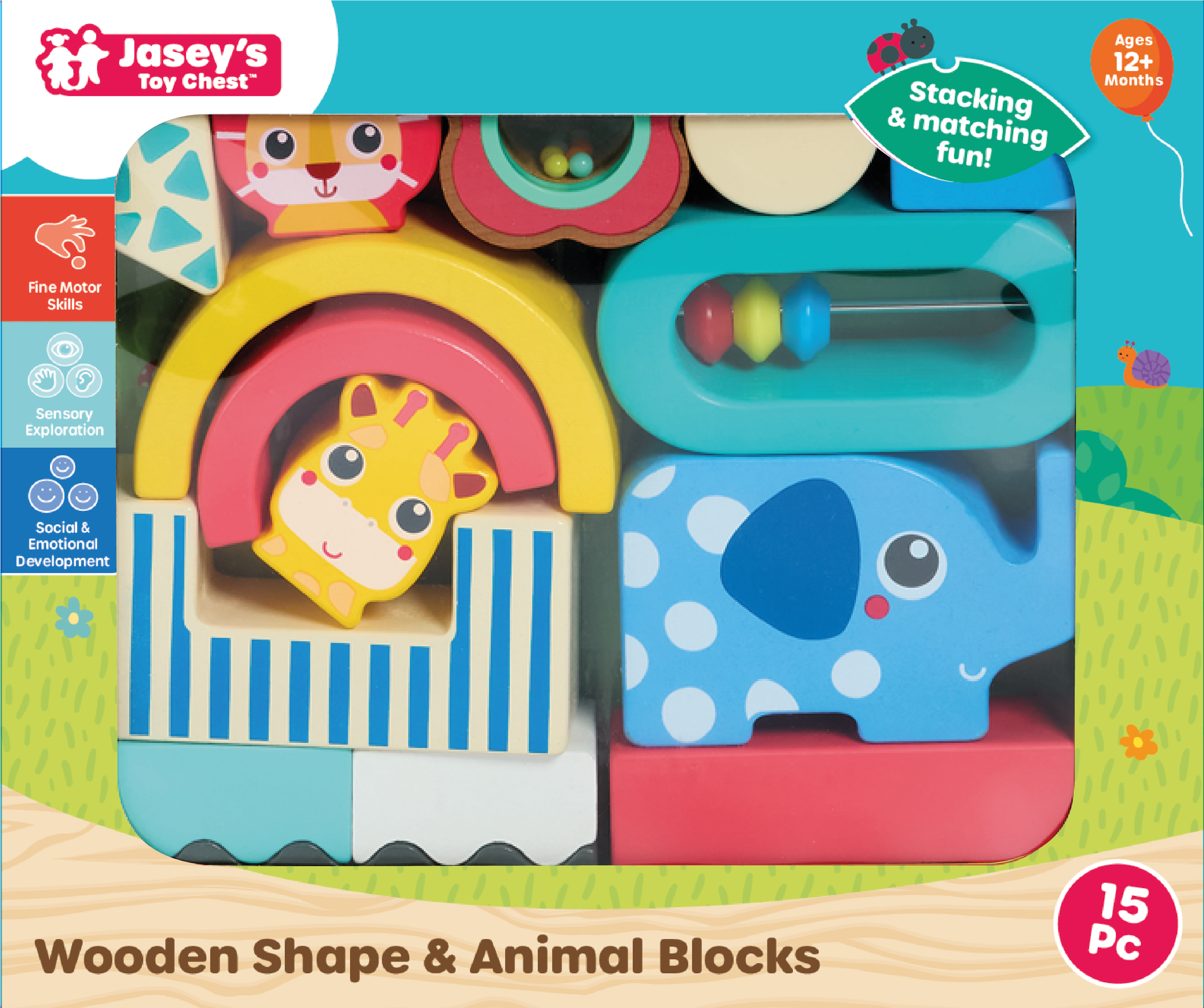
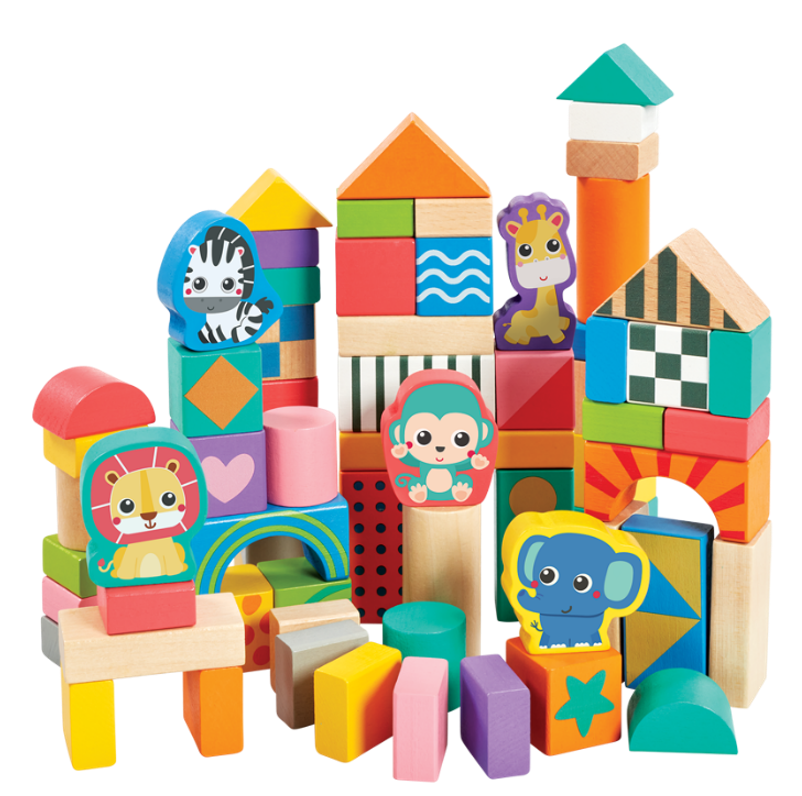
Wooden Shape & Animal Blocks | 12+ Months
From our Building, Blocks, & Construction collection.
Skills: Problem-Solving, Mindfulness, Handling Emotions
Create freely.
Let your child explore different ways to stack and balance. Tell stories with the characters. Open-ended play builds imagination and flexible thinking.Pause and notice.
Encourage your child to look closely: "What shapes fit best together?" This kind of focused attention helps kids slow down and stay calm.Handle the tumble.
When towers fall, say "You worked hard on that. Let's rebuild!" This helps children practice perseverance.Name the feeling.
If they're frustrated, name it: "When that fell over, you screamed. It seems like you were angry and sad." This helps children understand and manage their emotions.Celebrate their discoveries.
Admire their designs and discoveries: "You found a new way to stack the lion!" This reinforces confidence and creative pride. -
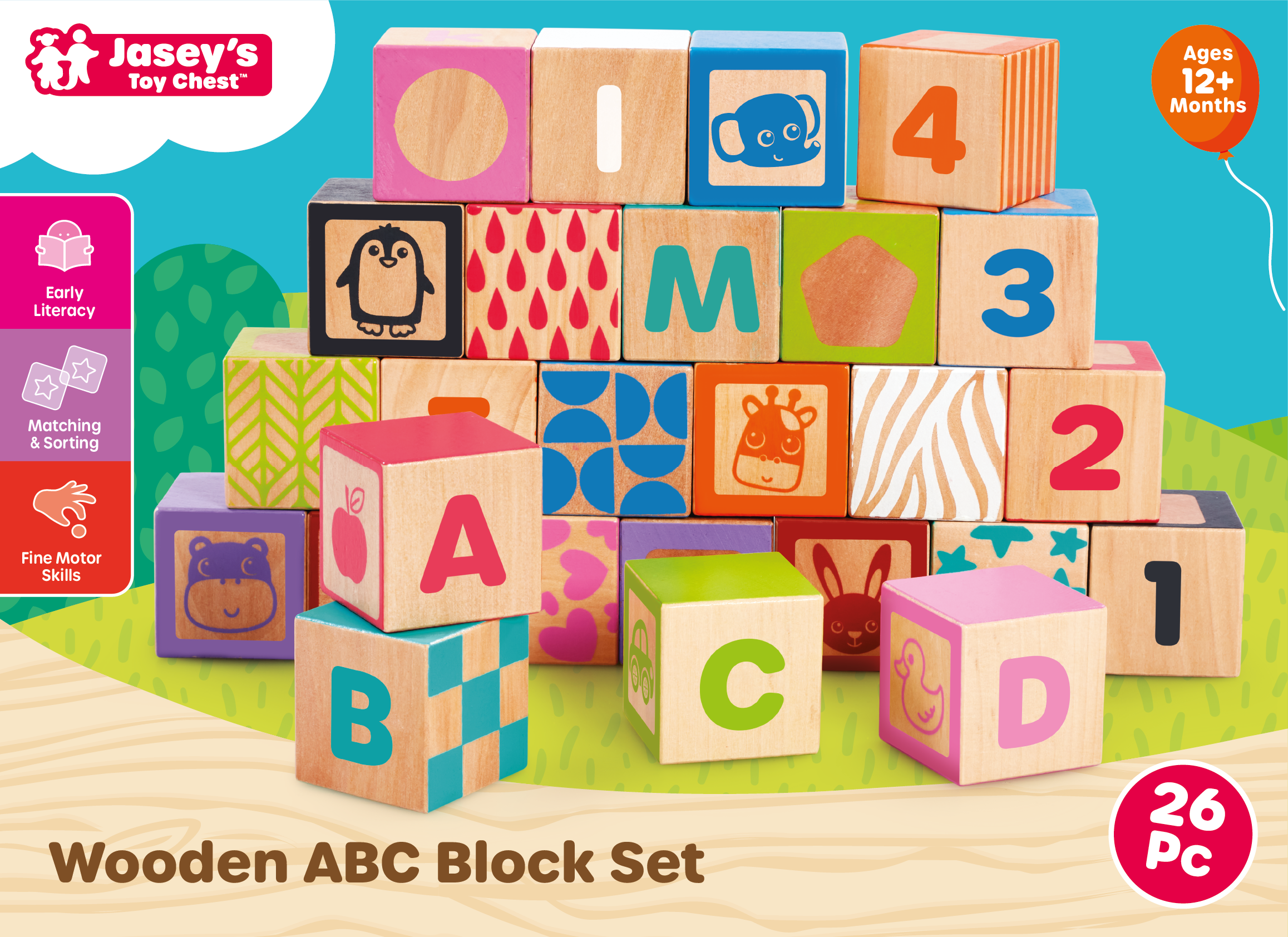
Wooden ABC Block Set | 12+ Months
From our Building, Blocks, & Construction collection.
Skills: Independence, Handling Emotions
Let them lead.
Set aside distractions and give them your full attention. Ask how they'd like to play: "What should we build with the blocks?"Try again together.
When blocks fall, take a breath and say "That's okay. Let's try again." Modeling calm persistence teaches resilience.Say what you see.
If they're frustrated, name it: "When the blocks fell, you yelled and stomped. It seems like you were frustrated." This helps children understand their emotions.Celebrate the effort.
End with warmth and encouragement: "I loved building with you. You worked hard and didn't give up!" This reinforces self-worth and positive self-talk. -
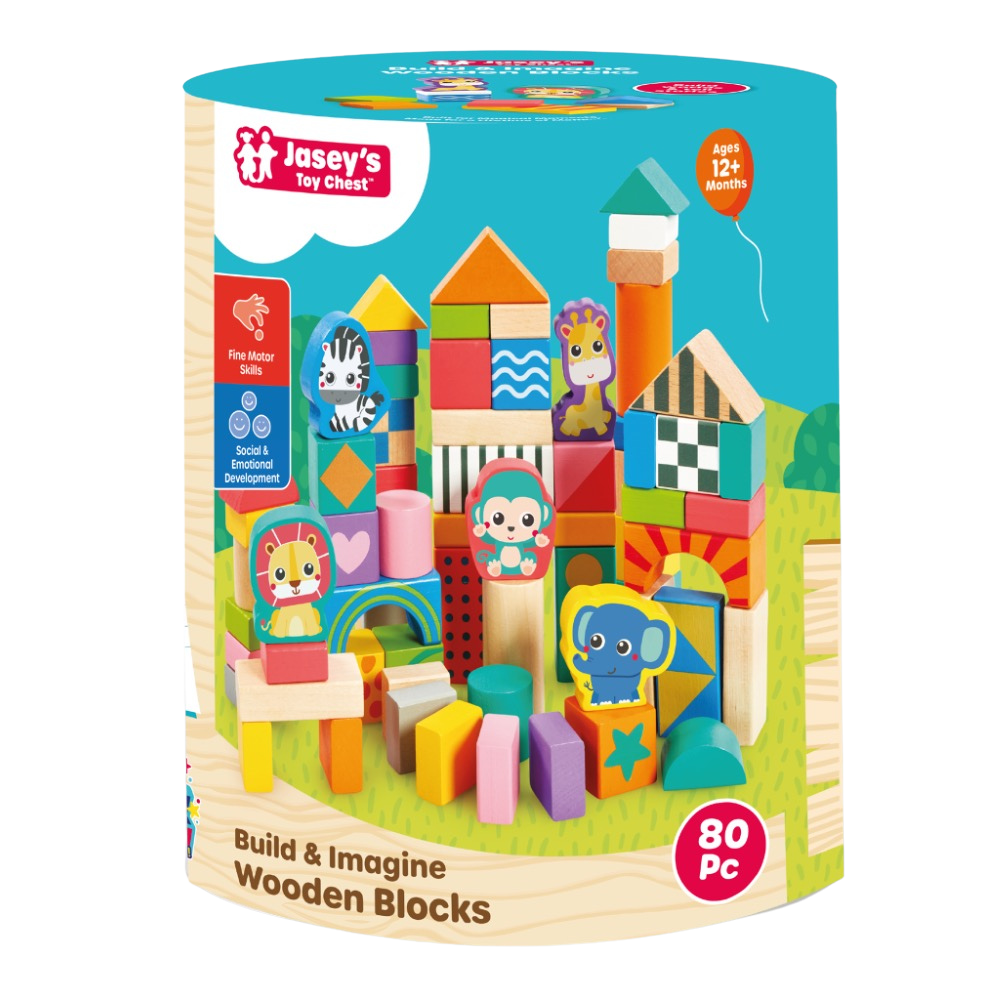
Build & Imagine Wooden Blocks | 12+ Months
From our Building, Blocks, & Construction collection.
Skills: Independence, Problem-Solving, Handling Emotions
Dream it first.
Ask, "What should we build today? A zoo, a castle, or a town?" Planning together boosts imagination and teamwork.Build together.
Take turns stacking and balancing pieces. Practicing patience and cooperation builds empathy and focus.Bounce back.
When towers tumble, say "Let's rebuild!" Modeling calm persistence helps kids manage frustration.Notice their feelings.
If they're upset, label it: "When the blocks fell, you shouted and put your head in your hands. It seems like you were frustrated." This helps children understand what they're feeling.Celebrate creation.
Admire their masterpiece and talk about what they built. Reflecting on their work builds pride and confidence. -
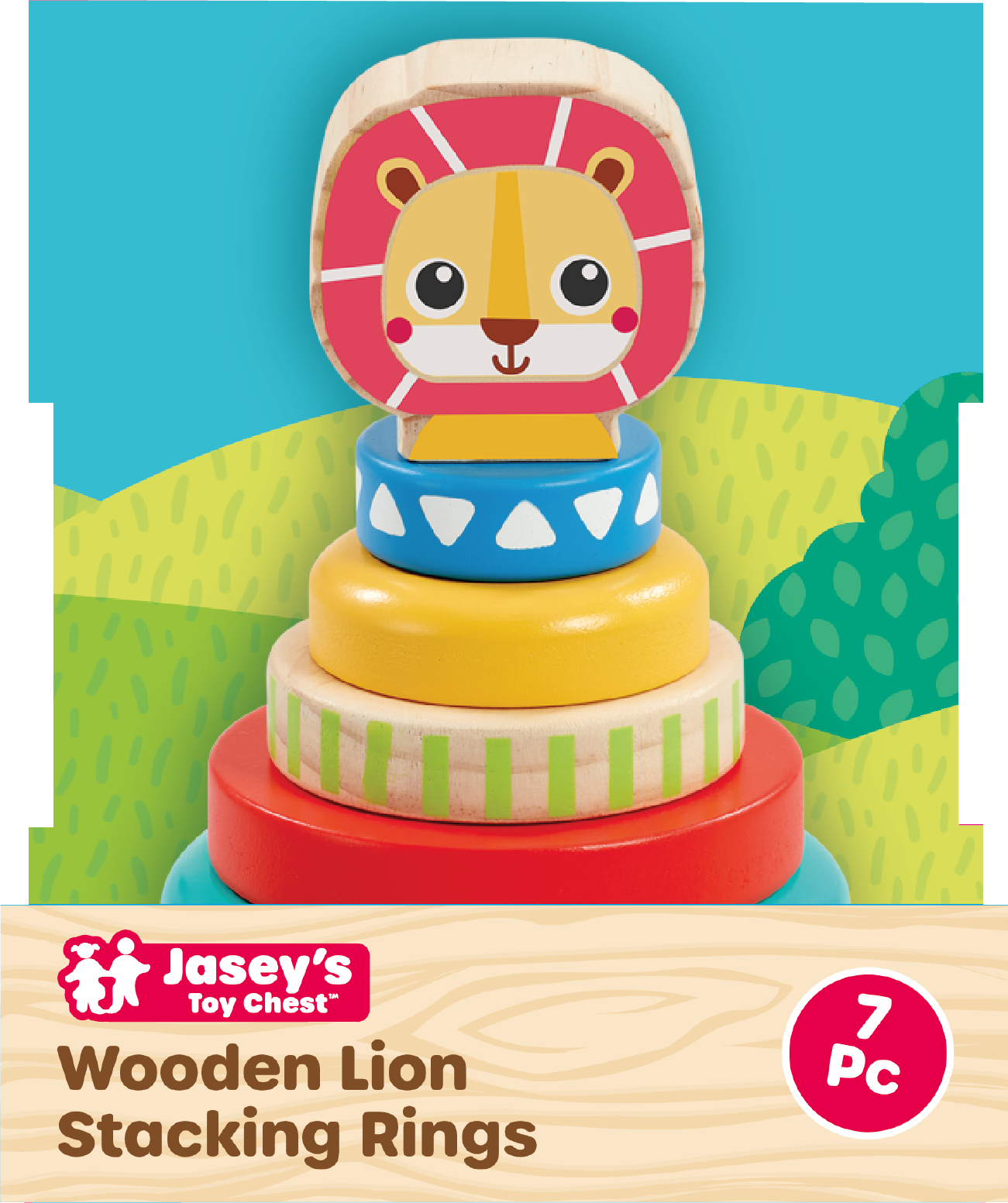
Wooden Lion Stacking Rings | 12+ Months
From our Toddler Activity Toys collection.
Skills: Handling Emotions, Mindfulness, Independence
Name the colors, name the effort.
As they stack, describe what you see: "You're really concentrating on that red ring!" Recognizing effort, not just success, builds self-esteem.Notice the textures.
Each ring feels different: some edges are round, some are square. Ask, "How does this one feel?" Tuning into textures builds mindful awareness and calm focus.Handle the wobble with wonder.
When the stack tips, smile and say, "Whoa, it wobbled like a dancing lion!" Turning a "mistake" into play teaches flexibility and resilience.Add a story.
Make it imaginative: "The lion is getting ready for a parade. Let's help him balance his crown!" Story-based play nurtures creativity and emotional expression.Celebrate the finish.
Clap and say, "You did it. Hard work pays off!" This builds pride and persistence. -
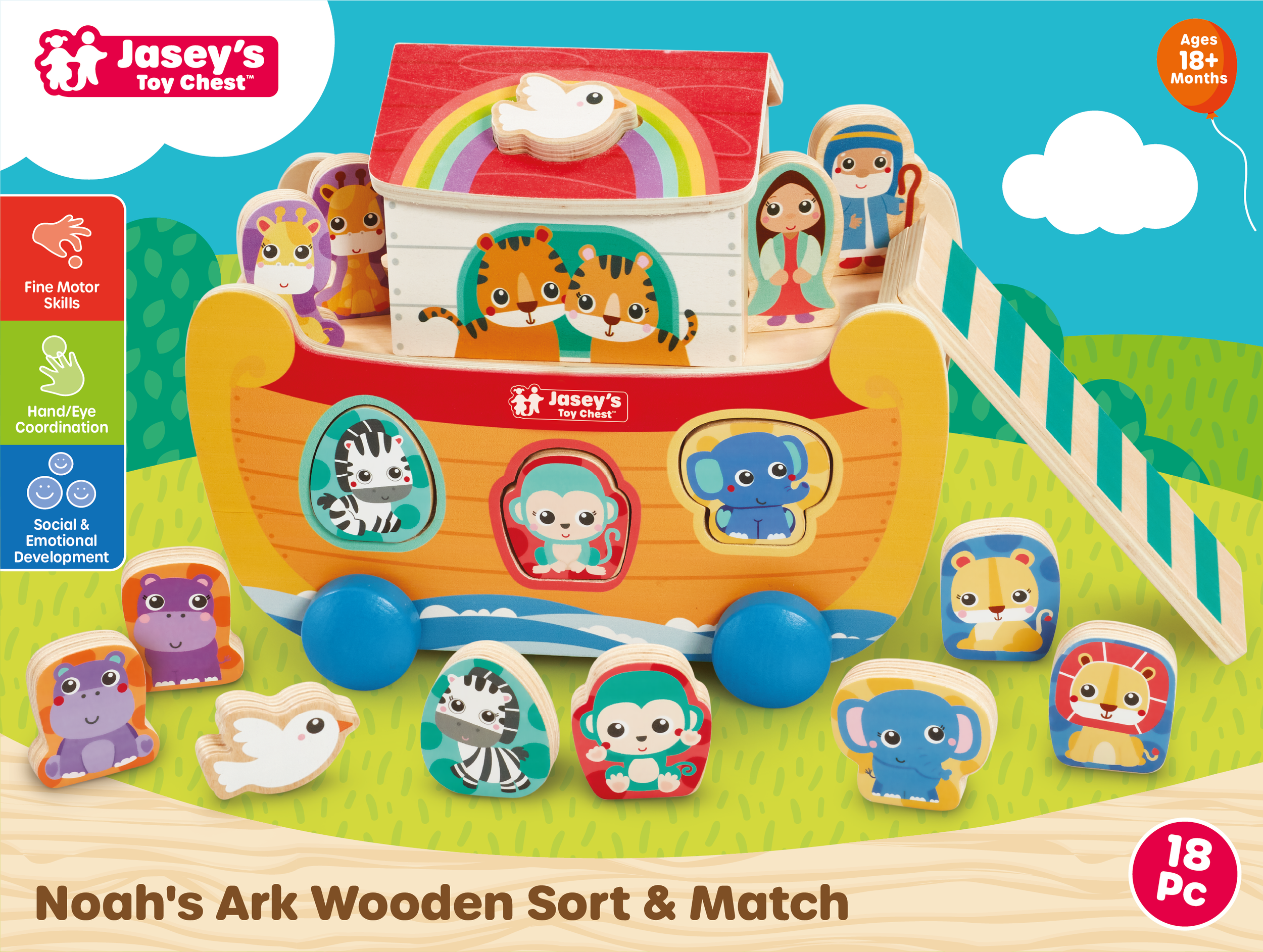
Noah's Ark Wooden Sort & Match | 18+ Months
From our Toddler Activity Toys collection.
Skills: Social Awareness, Mindfulness, Decision-Making
Pair the friends.
Help your child match each animal pair: "The elephant found its friend!" Matching builds focus and problem-solving.Take turns helping.
Say, "You place one, I'll place one." Turn-taking teaches patience and cooperation.Have them tell you their stories.
Ask, "Where is the boat going?" or "Who's the captain?" Storytelling nurtures imagination and emotional expression.Celebrate the teamwork.
When all the animals are aboard, say "We did it together!" Reinforces connection and shared accomplishment. -
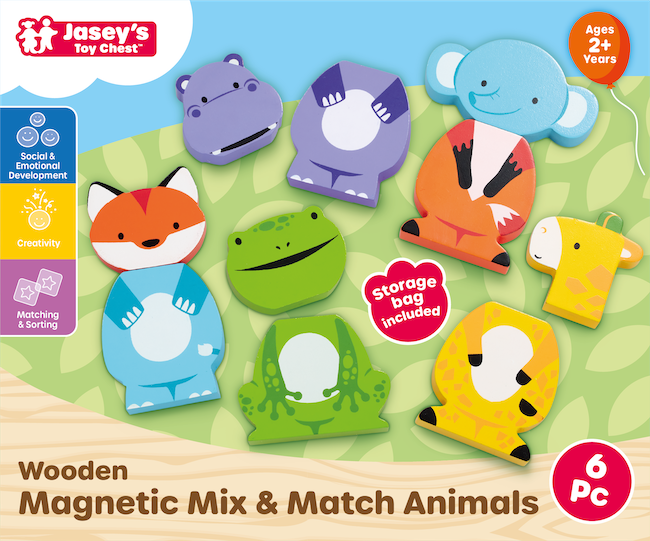
Wooden Magnetic Mix & Match Animals | 2+ Years
From our Toddler Activity Toys collection.
Skills: Handling Emotions, Decision-Making, Social Awareness
Mix and imagine.
Encourage your child to make new animal friends: "What should we call this one?" Inventive play sparks creativity and flexible thinking.Laugh together.
Share giggles over silly combinations. Laughter builds connection and helps children express joy and humor.Notice the details.
Match the pieces by color or by animal. Mindful attention builds focus and calm concentration.Celebrate creativity.
Praise their imagination: "You made something brand new!" Encourages pride and confidence in their ideas. -
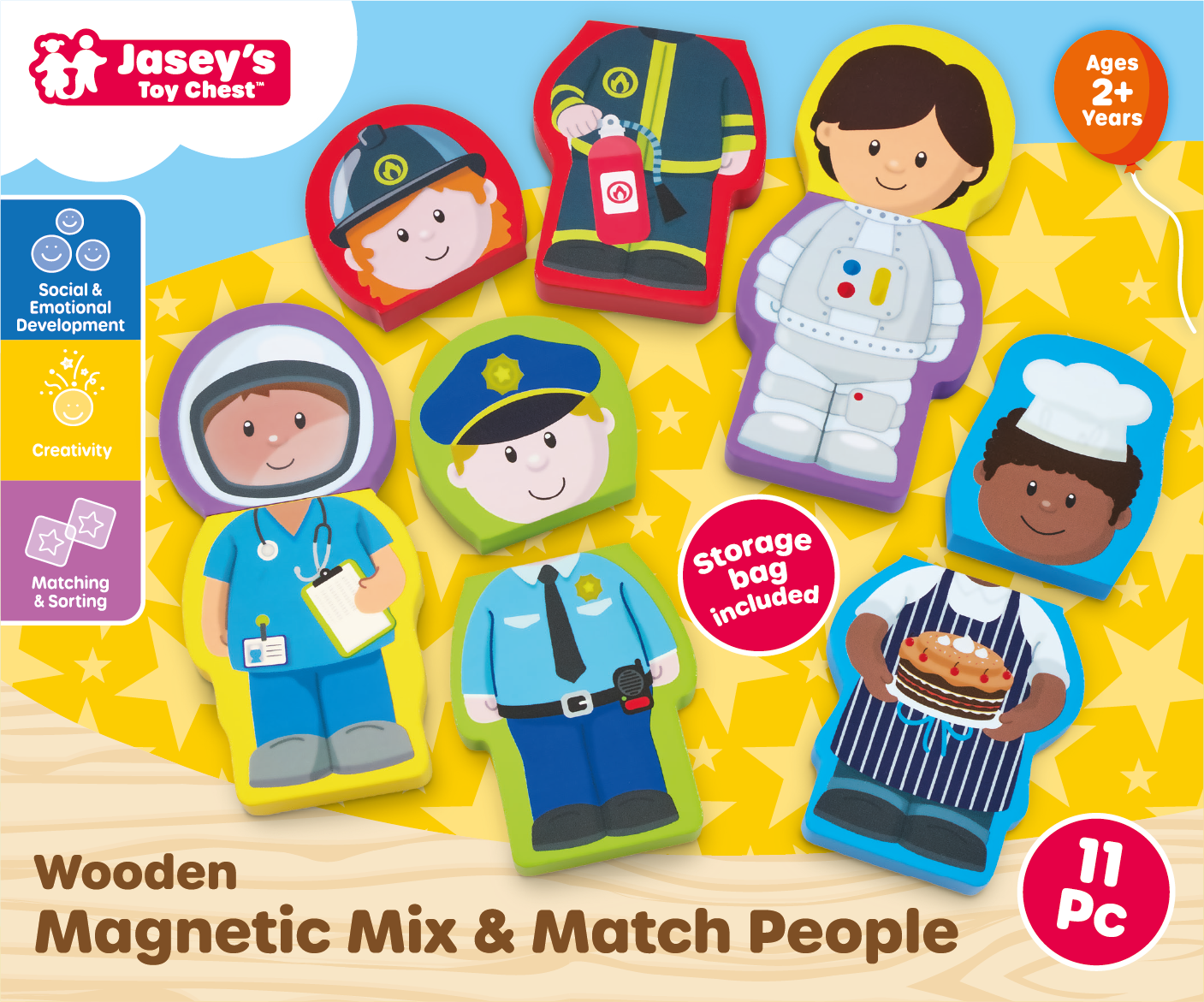
Wooden Magnetic Mix & Match People | 2+ Years
From our Toddler Activity Toys collection.
Skills: Social Awareness, Handling Emotions, Decision-Making
Create freely.
Ask, "Who did you make today?" or "What's their job?" Role play helps children understand others' experiences and emotions.Mix with meaning.
Encourage swapping roles: a chef in an astronaut suit or a nurse in a firefighter hat! Shows that everyone can be anything, building open-mindedness and creativity.Play together.
Join in the story and take turns choosing roles. Shared pretend play strengthens connection and communication.Celebrate kindness.
Talk about how each helper cares for others. Promotes empathy and pride in helping roles. -
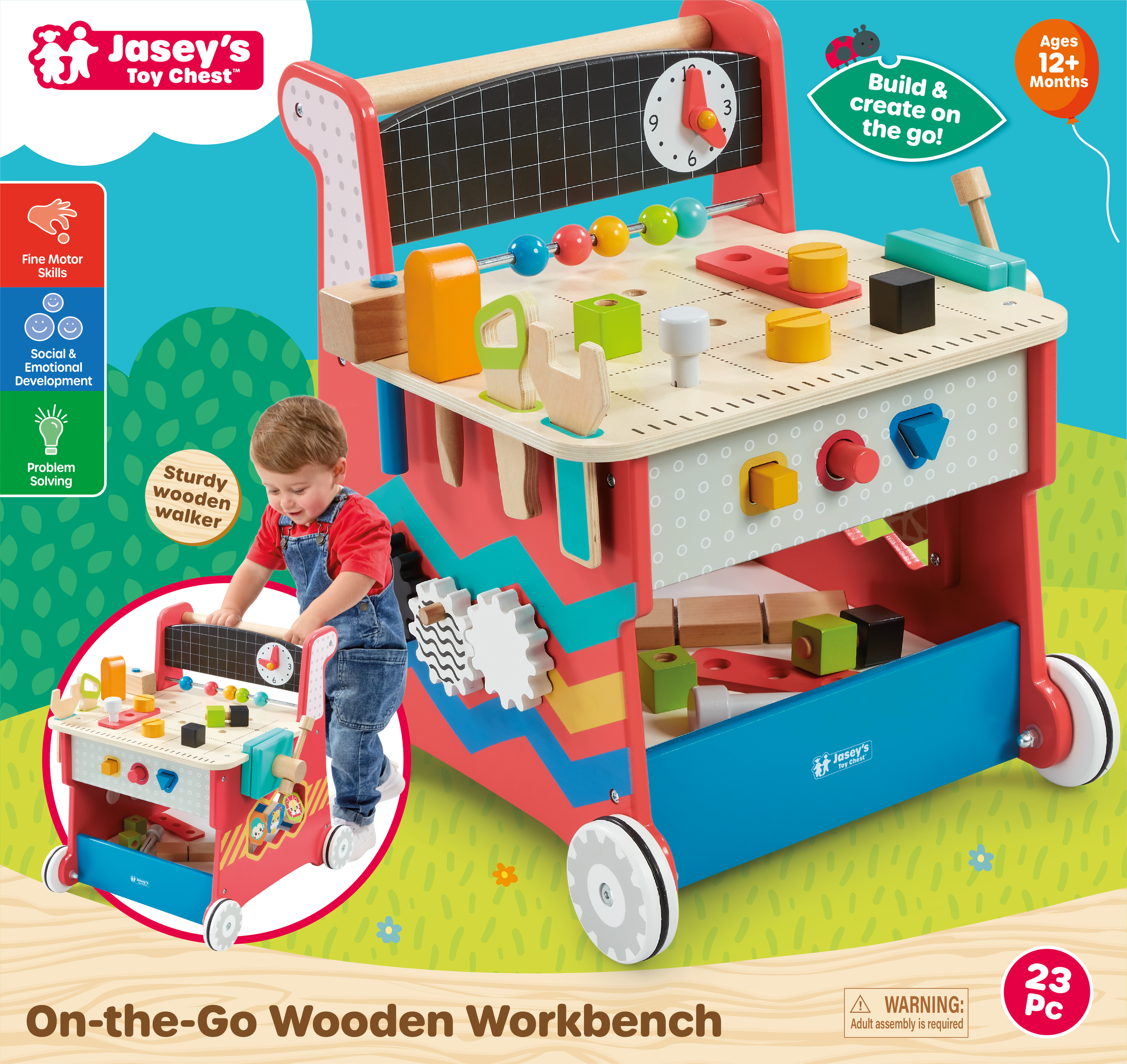
On-the-Go Wooden Workbench | 12+ Months
From our Toddler Activity Toys collection.
Skills: Independence, Problem-Solving, Decision-Making
Let them lead the build.
Ask, "Which tool do you want to use first?" Letting your child lead builds decision-making and confidence.Encourage steady steps.
Cheer as they push the walker: "Look at you staying balanced!" Celebrating small moments builds confidence.Turn mistakes into discoveries.
If a piece doesn't fit, say "Let's try it another way!" Reframing setbacks teaches flexibility and resilience.Add a story to the task.
Ask, "What are we fixing today?" Imaginative play supports creativity and language development.Celebrate progress, not perfection.
Say, "You kept trying. That's what matters!" This reinforces effort over outcome. -
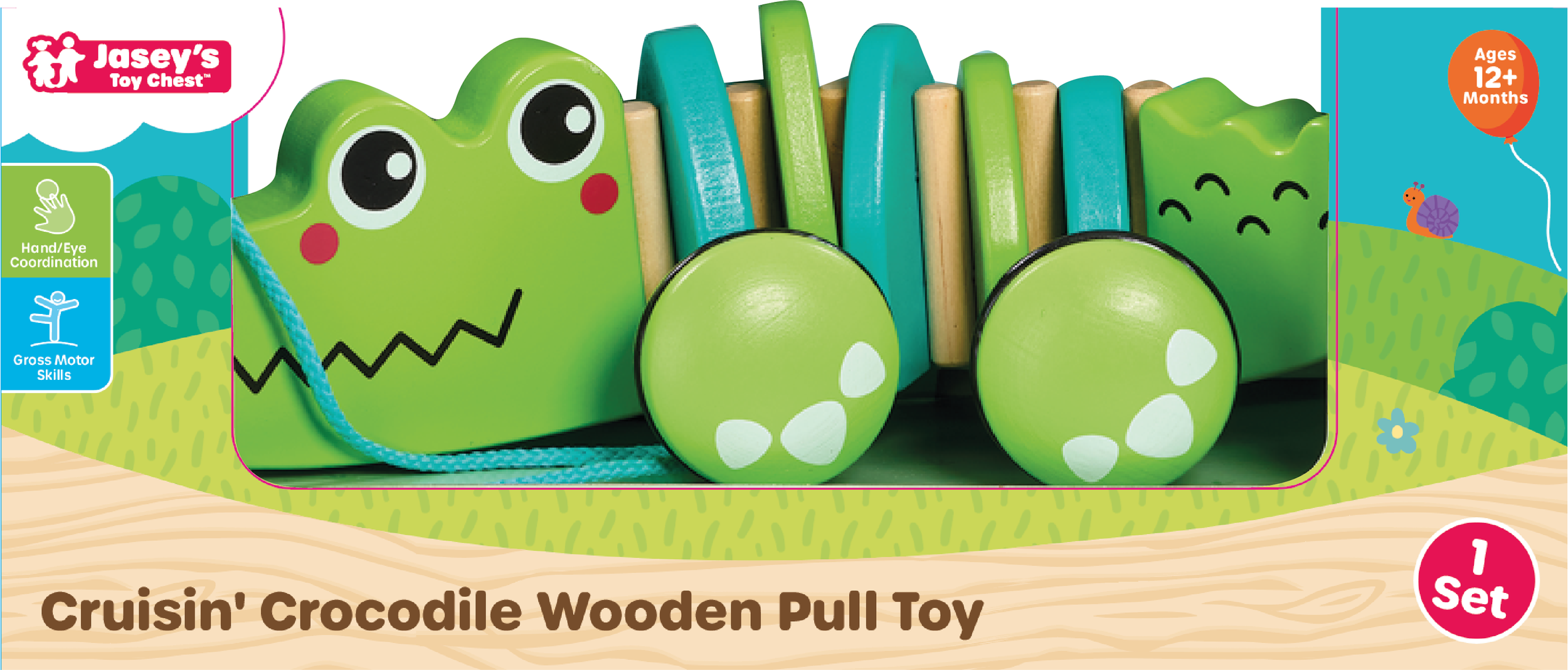
Cruisin' Crocodile Wooden Pull Toy | 12+ Months
From our Toddler Activity Toys collection.
Skills: Independence, Mindfulness, Handling Emotions
Walk with a friend.
Encourage your child to name their crocodile and "take it for a walk." Giving the toy a playful personality fosters empathy and social imagination.Celebrate effort, not speed.
Say, "I love how carefully you're pulling him!" Praising the process helps children feel proud and supported as they build balance and coordination.Find rhythm together.
Walk side by side and make a little beat: "Step, step, wiggle!" This helps toddlers connect movement, sound, and focus through playful mindfulness.Model patience and calm.
If the crocodile tips or gets stuck, pause and breathe together before trying again. Showing calm problem-solving builds emotional regulation and resilience.End with connection.
When play is done, let your child "park" the crocodile in a special spot and say goodbye. A gentle ritual that reinforces emotional awareness and closure. -
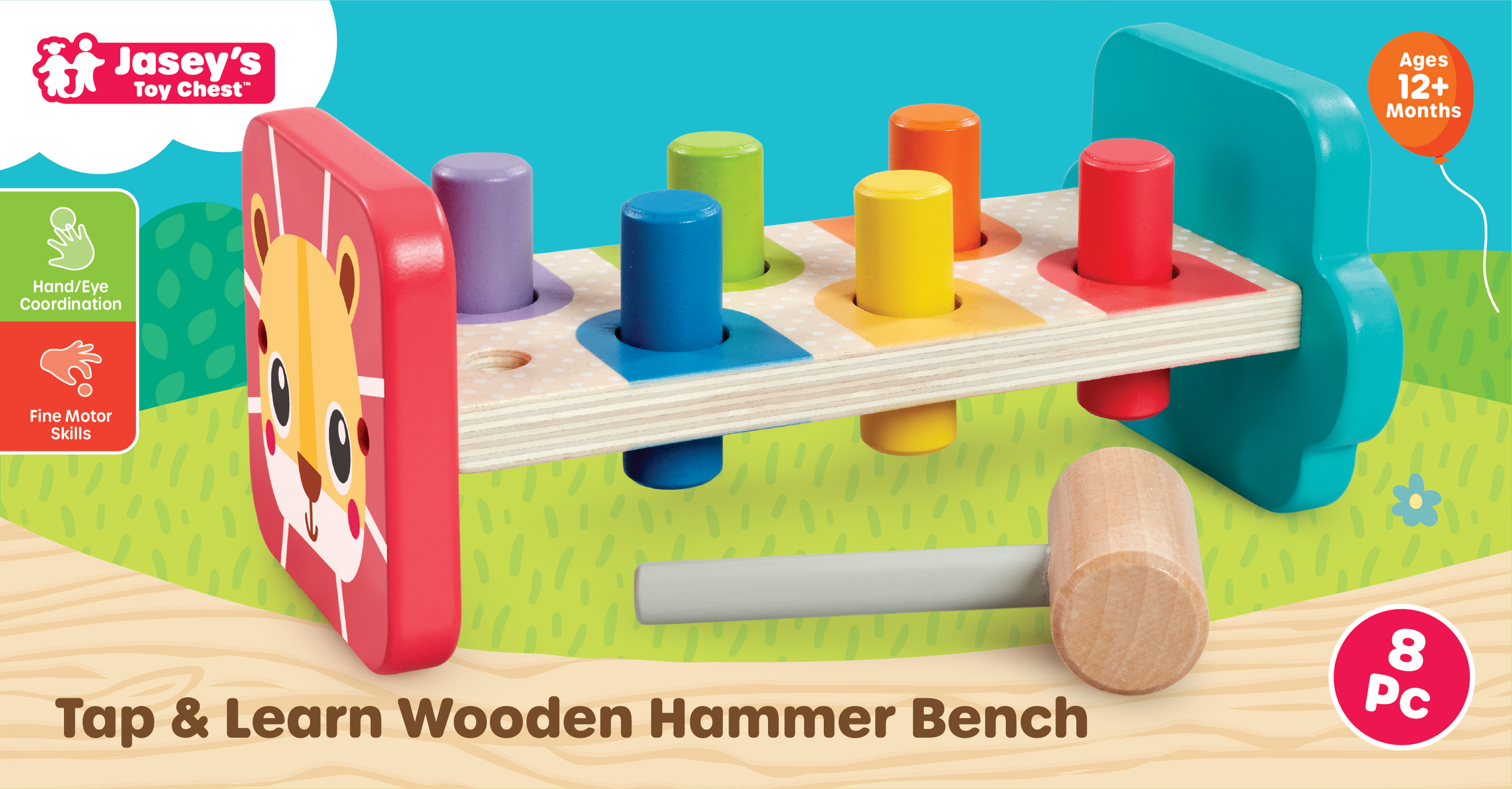
Tap & Learn Wooden Hammer Bench | 12+ Months
From our Toddler Activity Toys collection.
Skills: Handling Emotions, Mindfulness, Independence
Tap with purpose.
Encourage steady, focused tapping: "Let's tap gently and see what happens." Controlled movements build body awareness and focus.Match the colors.
Ask, "Can you tap the red peg?" Matching colors builds focus and independent problem-solving.Handle the oops.
If they miss or get frustrated, say "That's okay! Let's try again." Calm responses to mistakes build emotional resilience.Celebrate every swing.
Say, "You did it! You tapped all the pegs through!" Recognizing effort builds confidence and pride. -
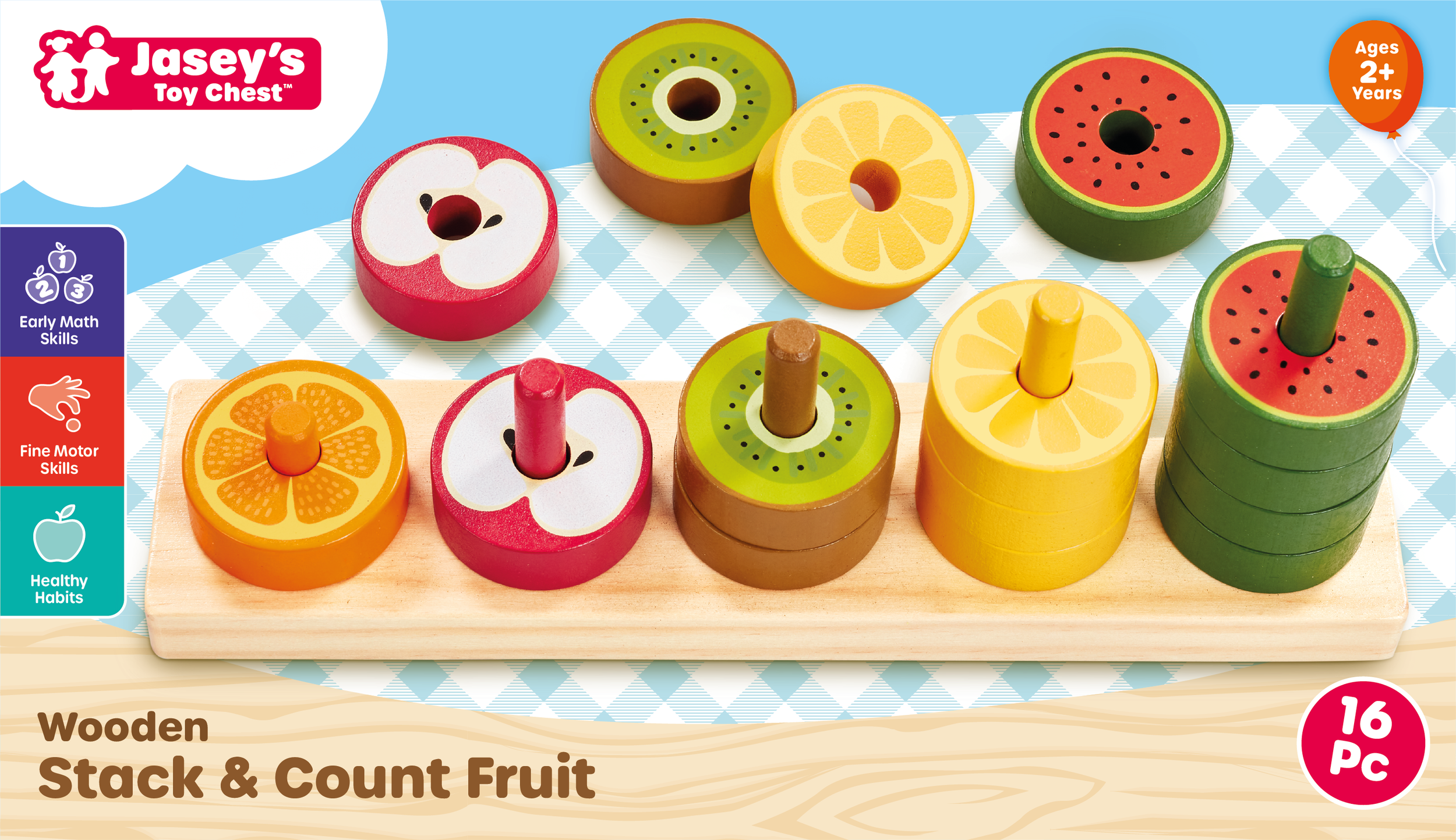
Wooden Stack & Count Fruit | 18+ Months
From our Learning & Educational collection.
Skills: Mindfulness, Handling Emotions
Stack mindfully.
Encourage your child to stack each fruit slowly, one by one, and say "Let's see how tall we can make it without rushing." Mindful stacking builds patience, balance, and calm concentration.Count together.
Say the numbers out loud as you stack: "One orange, two lemons, three kiwis..." Counting rhythmically supports focus and helps children feel grounded.Reset and retry.
When struggling to put the fruit on the peg, say "This is frustrating. Let's take a deep breath together." Then encourage them to try again. Modeling calm persistence builds emotional regulation and resilience.Celebrate every stack.
When your child finishes, smile and say "You worked carefully. Look what you built!" Recognizing effort (not just outcome) strengthens confidence and self-worth. -
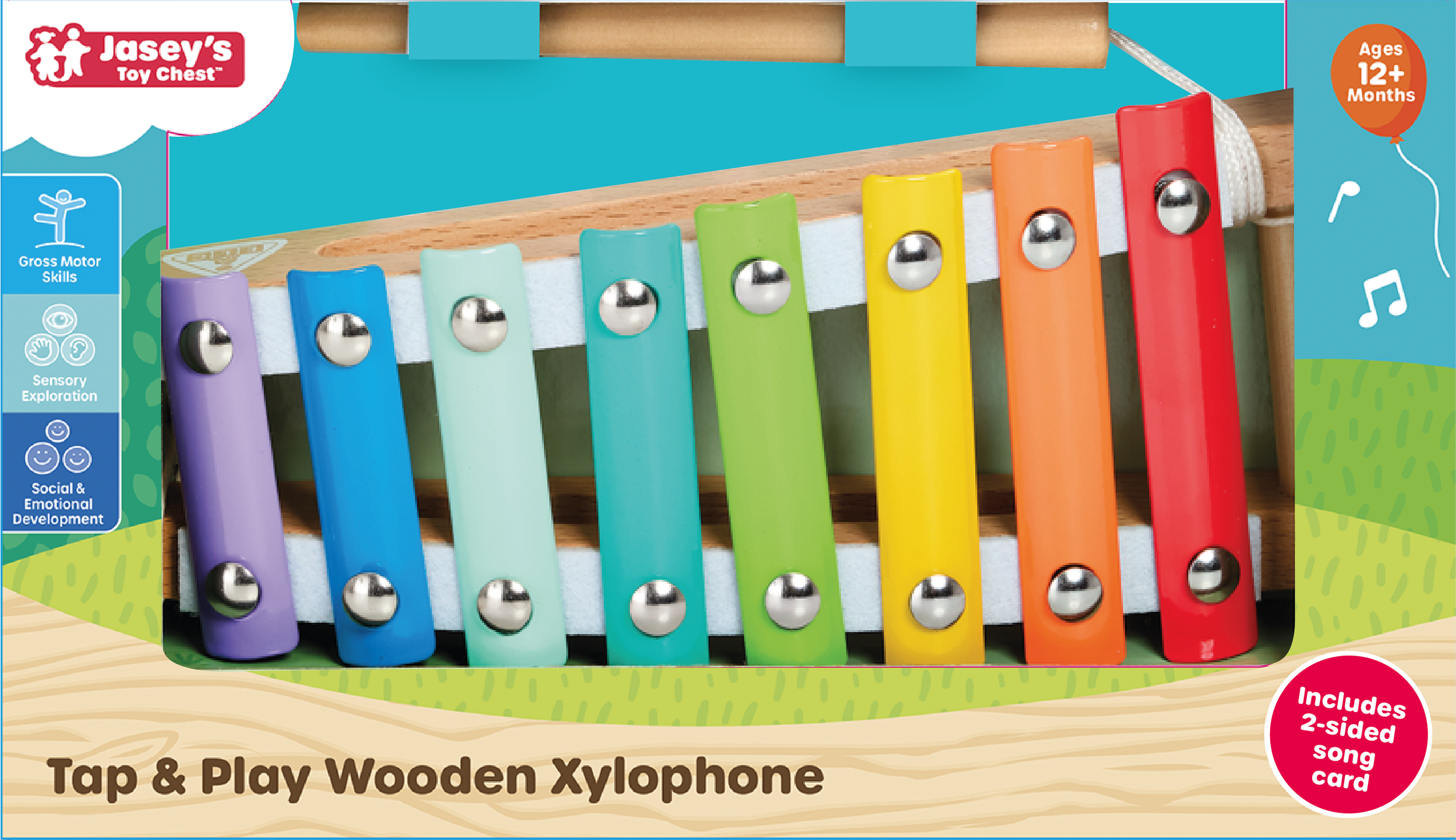
Tap & Play Wooden Xylophone | 12+ Months
From our Learning & Educational collection.
Skills: Independence, Handling Emotions, Mindfulness
Tap and listen.
Let your child tap each color gently: "Hear the sounds go from low to high?" Listening closely builds mindfulness and body awareness.Create your own rhythm.
Take turns making patterns: one beat from you, one from them. This back-and-forth builds connection, cooperation, and focus.Make a music moment.
Dim lights, slow down, and play a soft tune together before bedtime. Shared calm through music helps regulate energy and emotions.Celebrate their song.
Clap along and say, "I love your music. It sounds just like you!" Encourages self-confidence and pride in creative expression. -
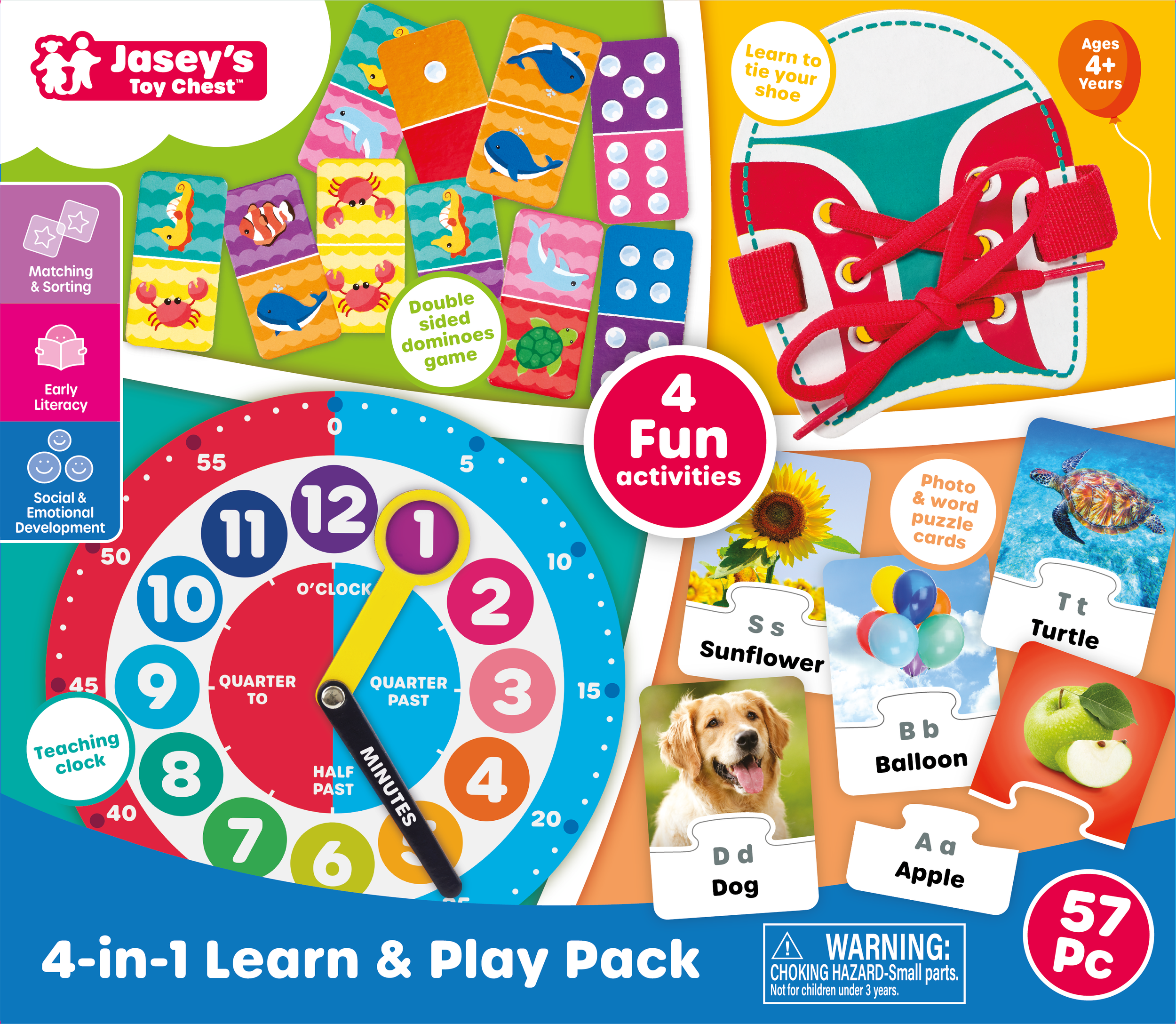
4-in-1 Learn & Play Pack | 4+ Years
From our Learning & Educational collection.
Skills: Independence, Problem-Solving, Decision-Making
Try new challenges.
Encourage your child to pick one game at a time. Completing small steps builds focus and confidence.Practice patience.
When learning to tie shoes or tell time, praise the effort, not perfection. This teaches patience, perseverance, and pride in progress.Let them lead.
If they make a mistake matching or lacing, resist the urge to step in. Letting them figure it out builds problem-solving, resilience, and confidence.Take turns.
Play dominoes together, matching pieces back and forth. This builds cooperation and patience.Play and praise.
Celebrate every "I did it!" moment. Recognizing success builds self-esteem and motivation to keep learning. -
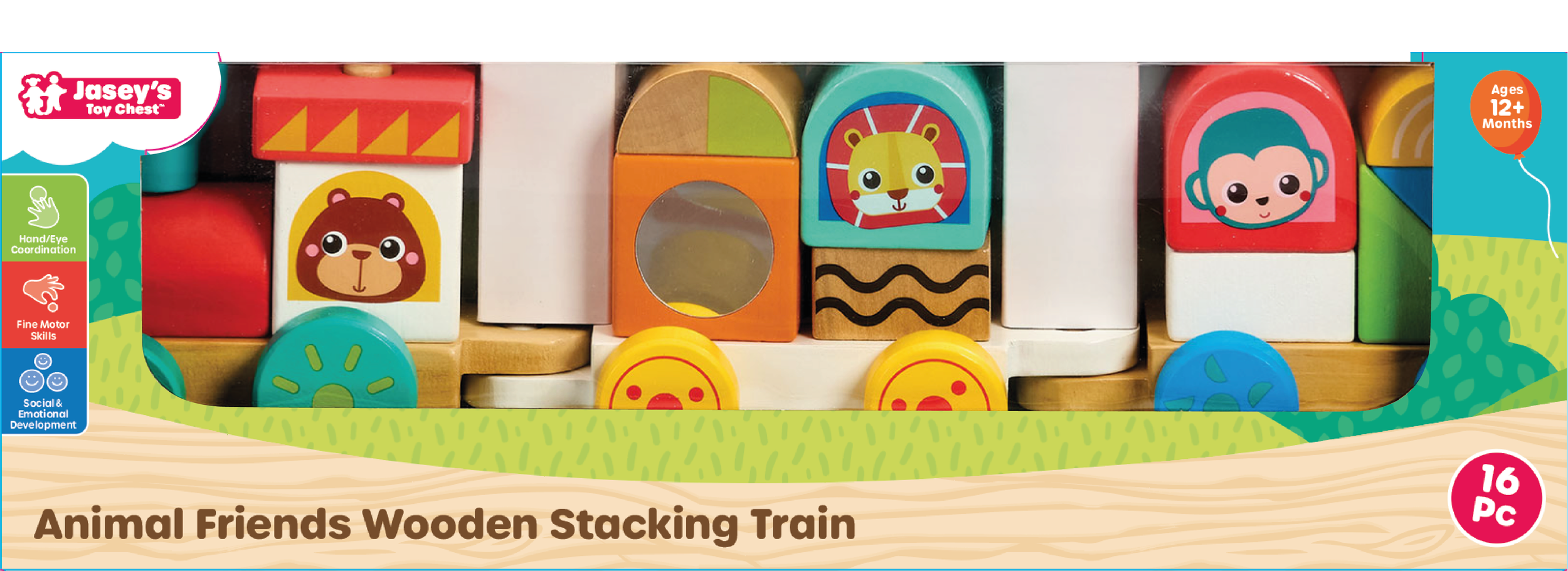
Animal Friends Wooden Stacking Train | 12+ Months
From our Trains & Vehicles collection.
Skills: Independence, Problem-Solving, Decision-Making
All aboard!
Ask, "Who's riding the train today? The lion, the elephant, or you?" Storytelling through play helps children express imagination and emotions.Stack and rebuild.
Cheer for each new combination: "You stacked the blocks a different way this time!" Acknowledging effort builds pride and persistence.Chug along together.
Take turns pushing the train back and forth while saying, "Your turn, my turn." Practicing give-and-take strengthens social awareness and cooperation.Celebrate the journey.
End playtime with a "train parade," clapping for the builder: "You made something amazing. Your train is ready for adventure!" This builds joy, confidence, and positive connection. -
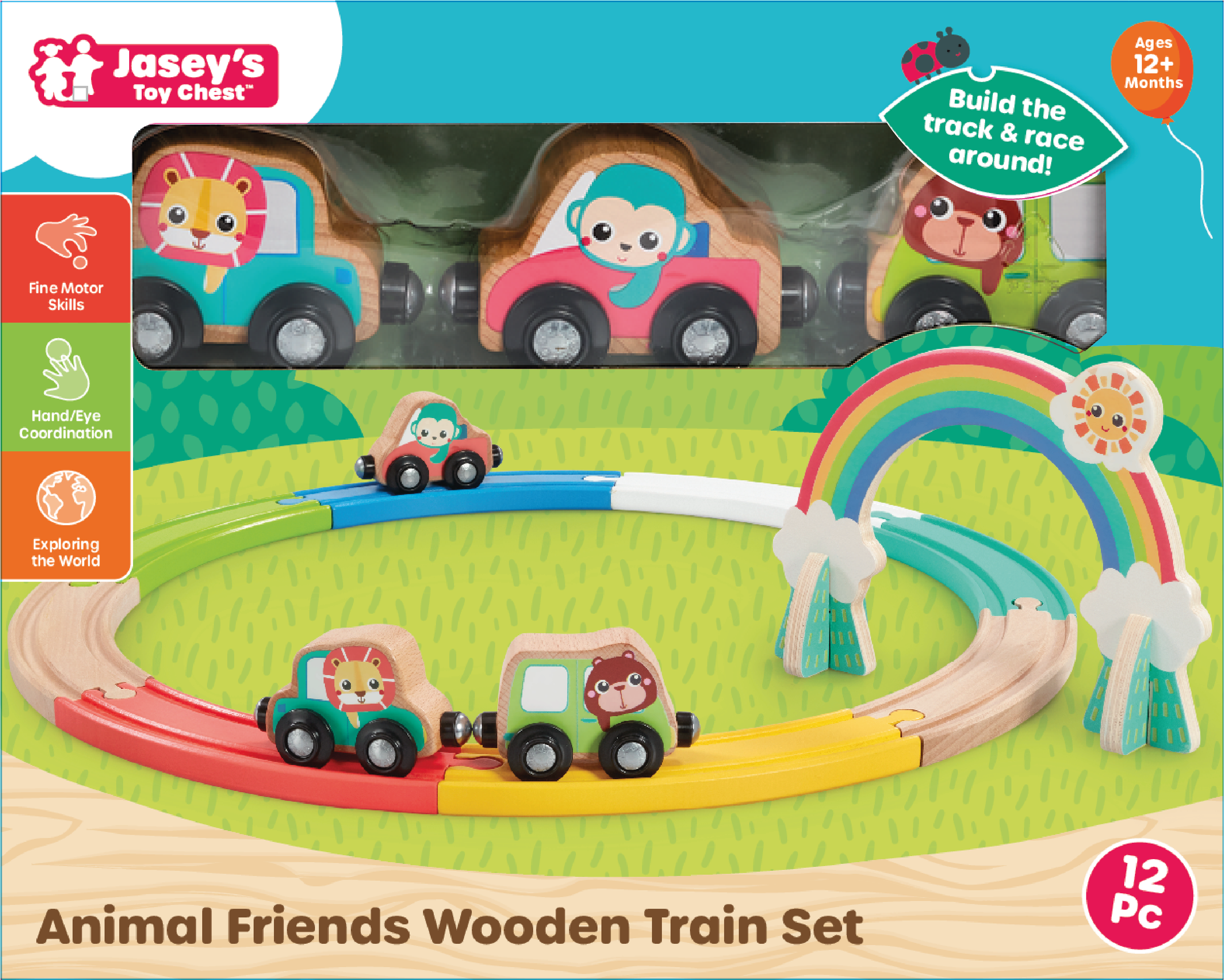
Animal Friends Wooden Train Set | 12+ Months
From our Trains & Vehicles collection.
Skills: Independence, Decision-Making, Social Awareness
Build the track together.
Let your child lead: "Where should the rainbow go today?" Following their ideas boosts confidence and decision-making.Create a travel story.
Ask, "Where are the animals going?" or "Who are they visiting?" Storytelling supports empathy and helps children explore feelings through imagination.Practice turn-taking.
Take turns arranging the magnetic train cars: "You pick who goes first, I'll pick who goes next!" Turn-taking reinforces cooperation and patience.Cheer them on!
Cheer together when the train makes it "home." Saying, "We did it together!" strengthens connection and a sense of shared joy. -
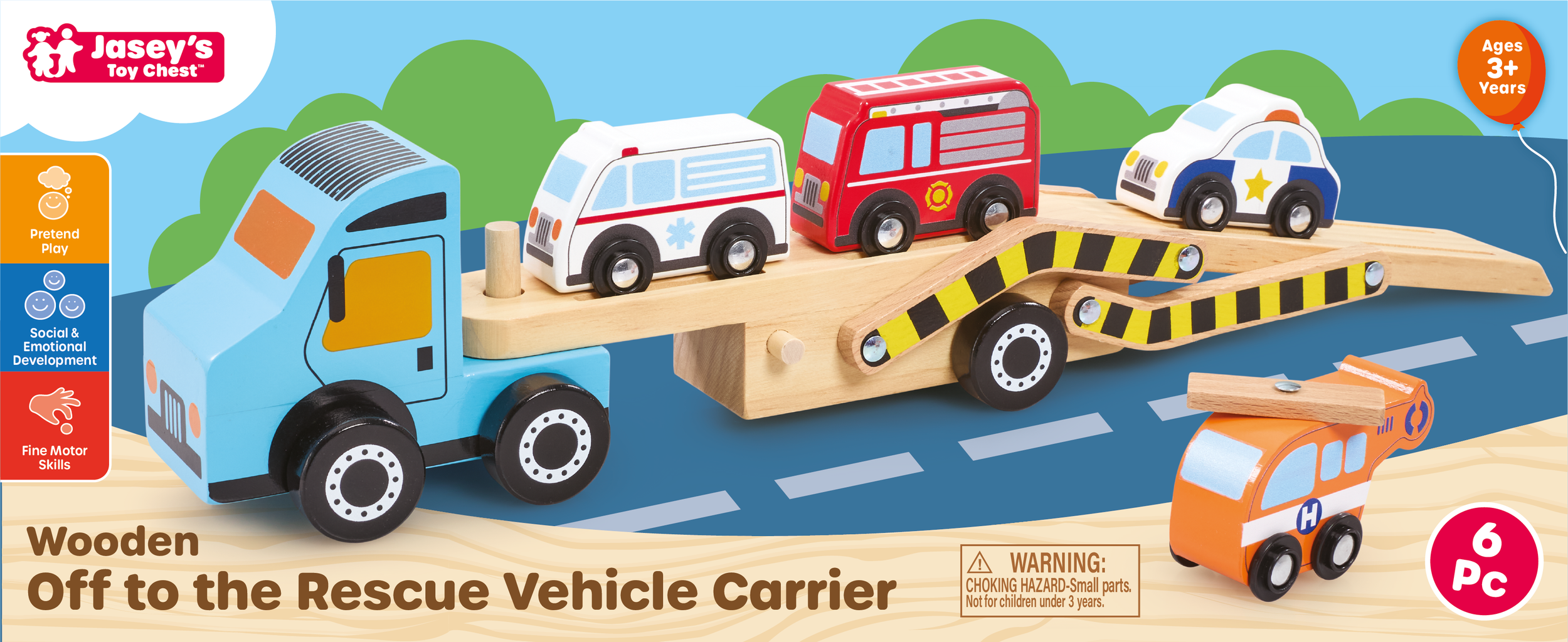
Wooden Off to the Rescue Vehicle Carrier | 3+ Years
From our Trains & Vehicles collection.
Skills: Social Awareness, Independence
Act out rescue missions.
Ask, "Who needs help today?" or "Where is the ambulance going?" Pretend play helps children explore compassion, bravery, and caring for others.Take turns leading the mission.
One person loads the vehicles, the other drives them to the rescue. Practicing teamwork and sharing builds cooperation and patience.Create helper stories.
Turn the playset into a caring community: the police car helps a lost puppy find home, or the helicopter flies in to save the day. Storytelling through kindness nurtures empathy and teamwork.Cheer for courage.
After each rescue, celebrate: "You helped everyone. Great teamwork!" This reinforces pride, confidence, and a sense of purpose.End with calm reflection.
Line up the vehicles and say, "All safe and sound. Time to rest." This teaches closure and gentle transitions between active play and calm time. -
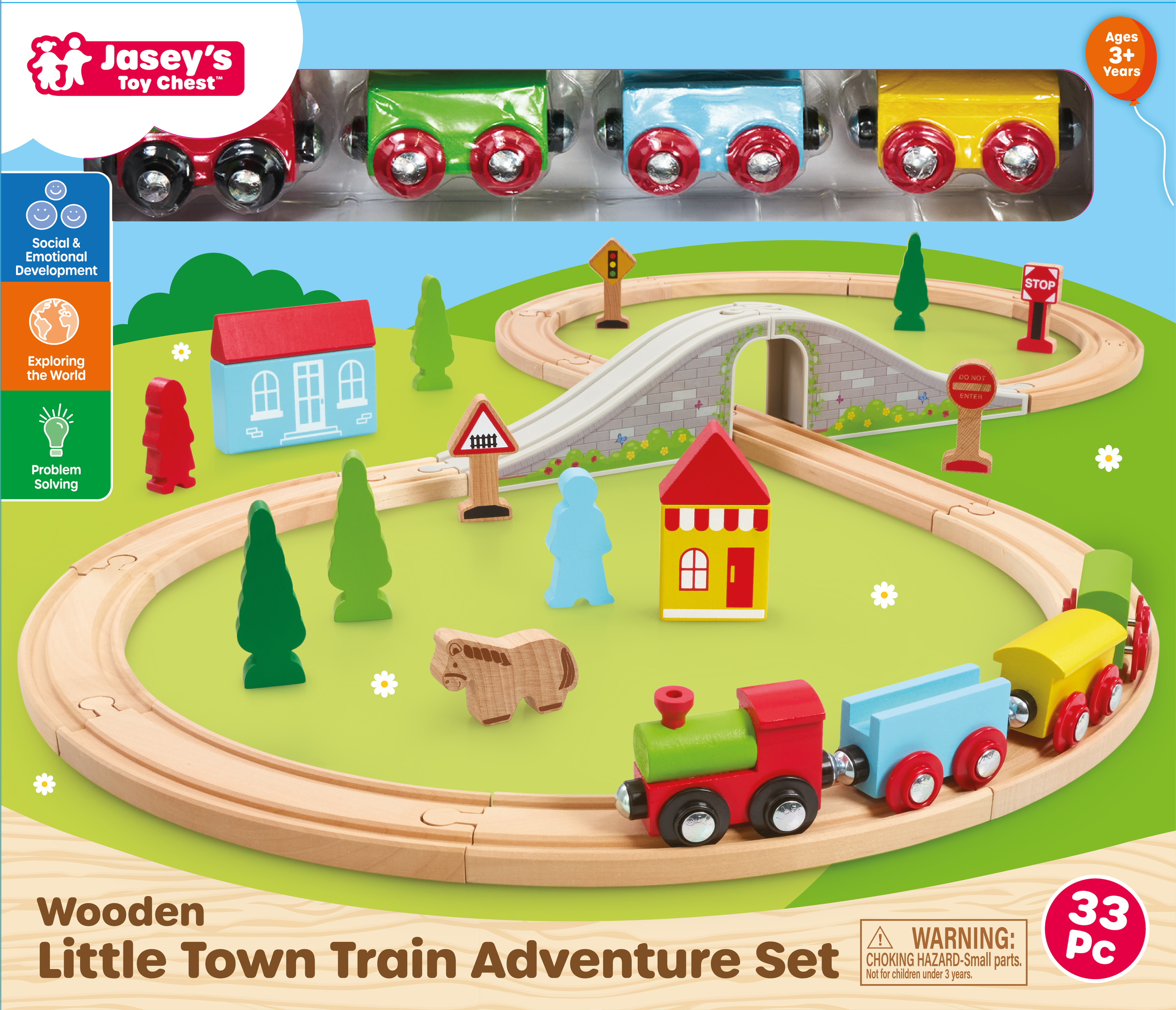
Wooden Little Town Train Adventure Set | 3+ Years
From our Trains & Vehicles collection.
Skills: Problem-Solving, Decision-Making, Handling Emotions
Build the town together.
Ask, "Where should the big building go?" or "Where will the pony live?" Collaborative decision-making helps children feel heard and capable.Create adventures.
Make up stories about the train's journey: "Who's riding today? Where are they going?" Storytelling invites empathy and sparks imagination.Practice patience.
If a track piece doesn't fit right away, encourage a calm try-again moment: "Let's twist it gently. We'll get it!" Modeling persistence builds frustration tolerance and focus.Celebrate!
Say, "We built a whole town together!" This affirms teamwork and creativity, and nurtures connection and pride. -
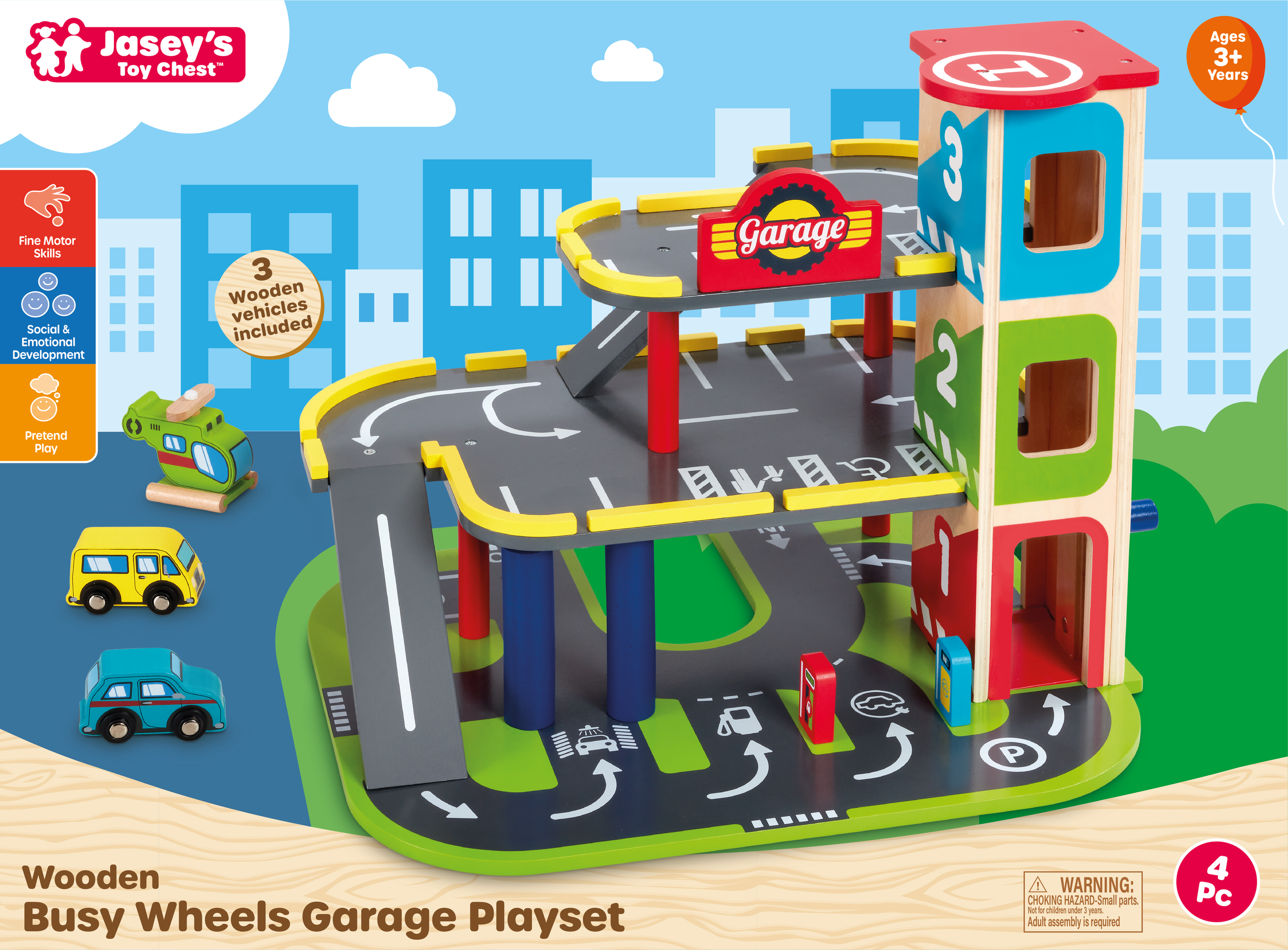
Wooden Busy Wheels Garage Playset | 3+ Years
From our Trains & Vehicles collection.
Skills: Independence, Social Awareness, Mindfulness
Follow their lead.
Invite your child to decide: "Which one do you want to play with first?" Empowering choices builds independence and confidence.Lift with care.
Encourage slow, careful turns of the handle: "Let's lift the car gently to the next floor." This teaches focus, control, and mindful movement.Notice the journey.
Watch together as the cars travel ramps and curves, describing what they see. Observing patterns builds presence and attention.Celebrate teamwork.
When all cars are parked and ready, say, "Everyone worked together. Mission complete!" This reinforces pride and calm satisfaction. -
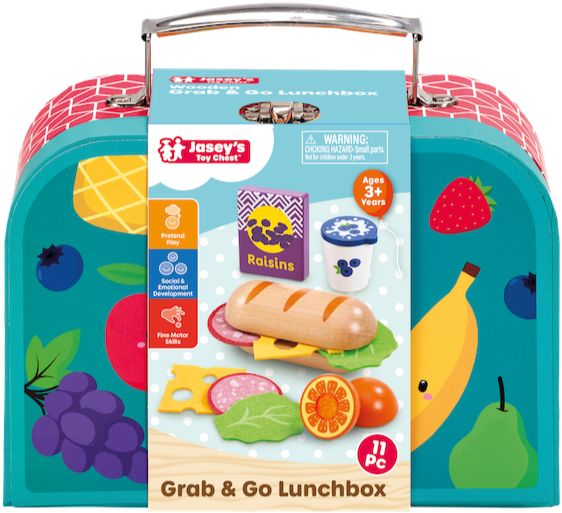
Grab & Go Lunchbox | 3+ Years
From our Pretend Play collection.
Skills: Social Awareness, Independence, Decision-Making
Plan the meal.
Ask, "What are we having today for lunch?" Taking turns making and sharing builds empathy and communication.Mix and match.
Let your child design their own sandwich or snack. Making choices encourages creativity and independence.Play together.
Join the pretend picnic! Modeling friendly conversation and manners nurtures social confidence.Celebrate sharing.
End by talking about favorite foods or what they enjoyed making. Reflecting together builds connection and pride. -
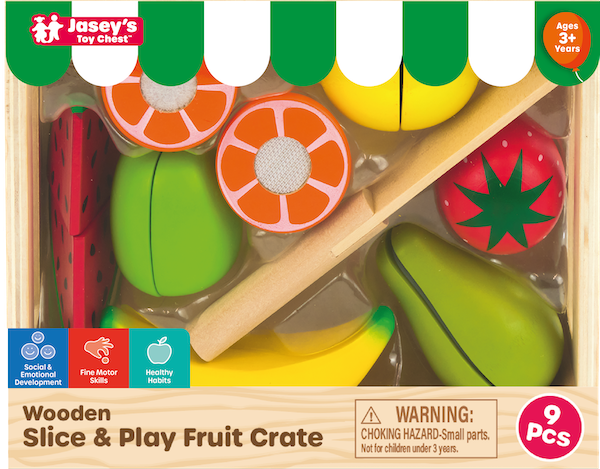
Wooden Slice & Play Fruit Crate | 3+ Years
From our Pretend Play collection.
Skills: Independence, Handling Emotions, Social Awareness
Listen for the crunch.
Encourage your child to listen for the soft "crunch" sound as they cut. Focusing on sound and motion helps calm energy and build mindful awareness.Play restaurant together.
Ask, "What's on today's menu?" or "Can you make a fruit salad?" Imaginative serving and turn-taking build communication and empathy.Celebrate helpful hands.
Praise their slicing: "You did such a good job cutting that watermelon." Acknowledging their effort builds independence and self-worth.Show gratitude.
Say, "Thanks for making lunch. You're such a great helper!" This builds connection and pride. -
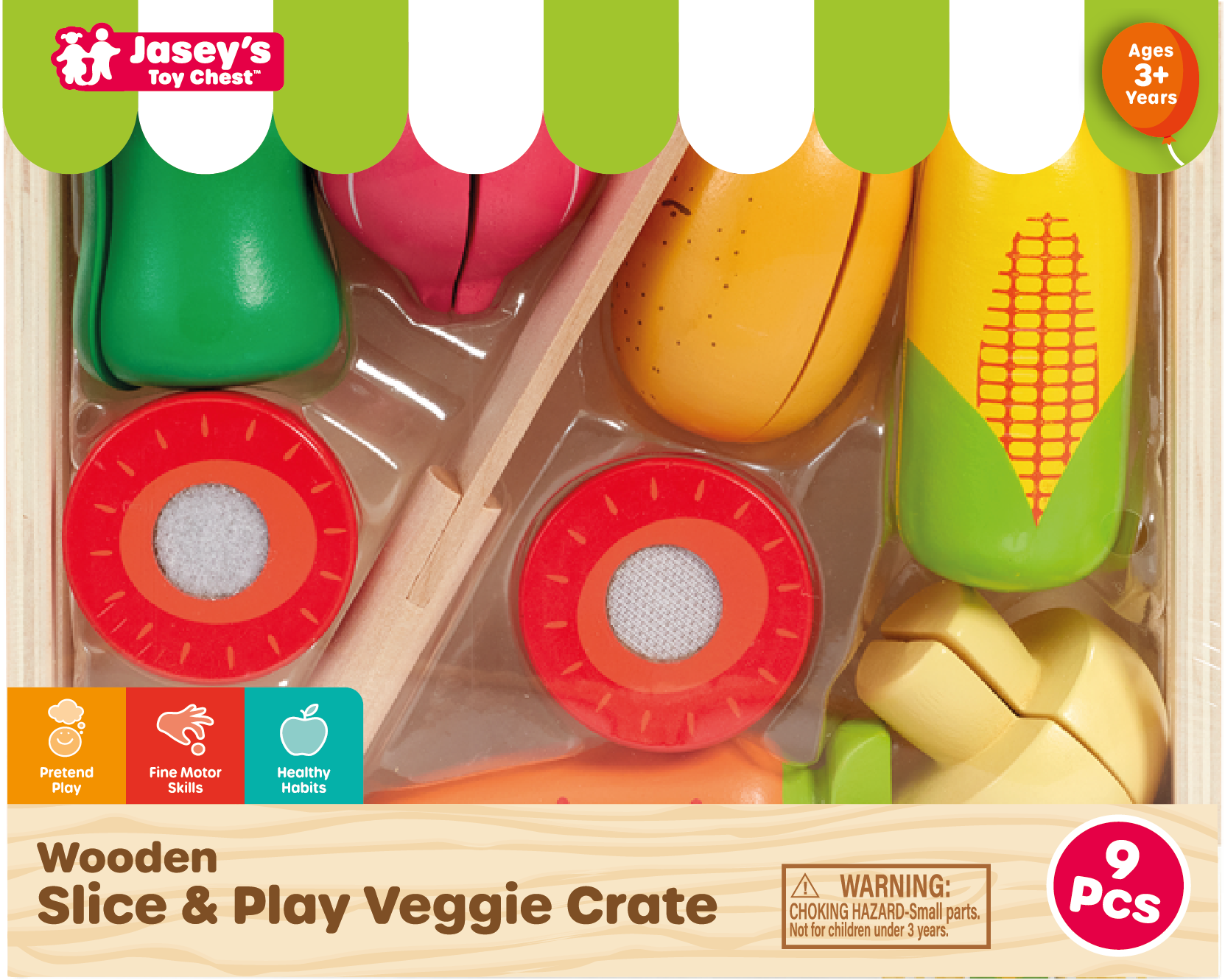
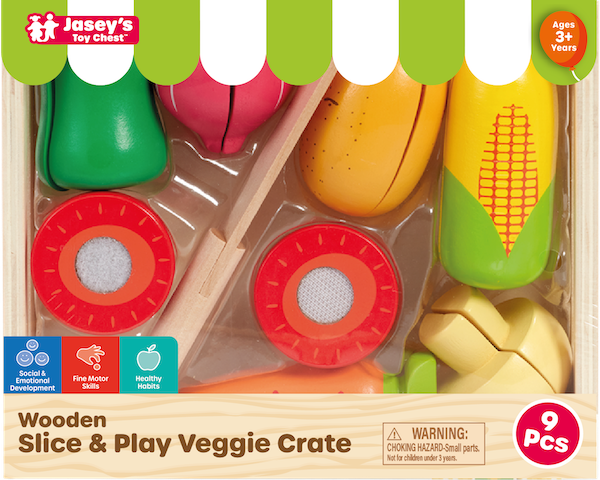
Wooden Slice & Play Veggie Crate | 3+ Years
From our Pretend Play collection.
Skills: Independence, Handling Emotions, Social Awareness
Cook with care.
Invite your child to "prepare dinner" for someone special: a friend, stuffed animal, or family member. Pretend cooking nurtures empathy and the joy of giving.Connect while you cook.
As they slice, ask gentle questions like, "Who are we cooking for?" or "What's your favorite meal?" Open-ended conversation builds language and emotional connection.Notice the sounds and colors.
Pause to listen to the "crunch" and name each color: "Green pepper, orange carrot, red tomato." Tuning into senses builds mindfulness and calm attention.Celebrate teamwork.
Take turns slicing, mixing, and serving. Collaborative play encourages cooperation and patience.End with gratitude.
After the "meal," say, "Thank you, chef. That was delicious!" Modeling appreciation strengthens confidence and kindness. -
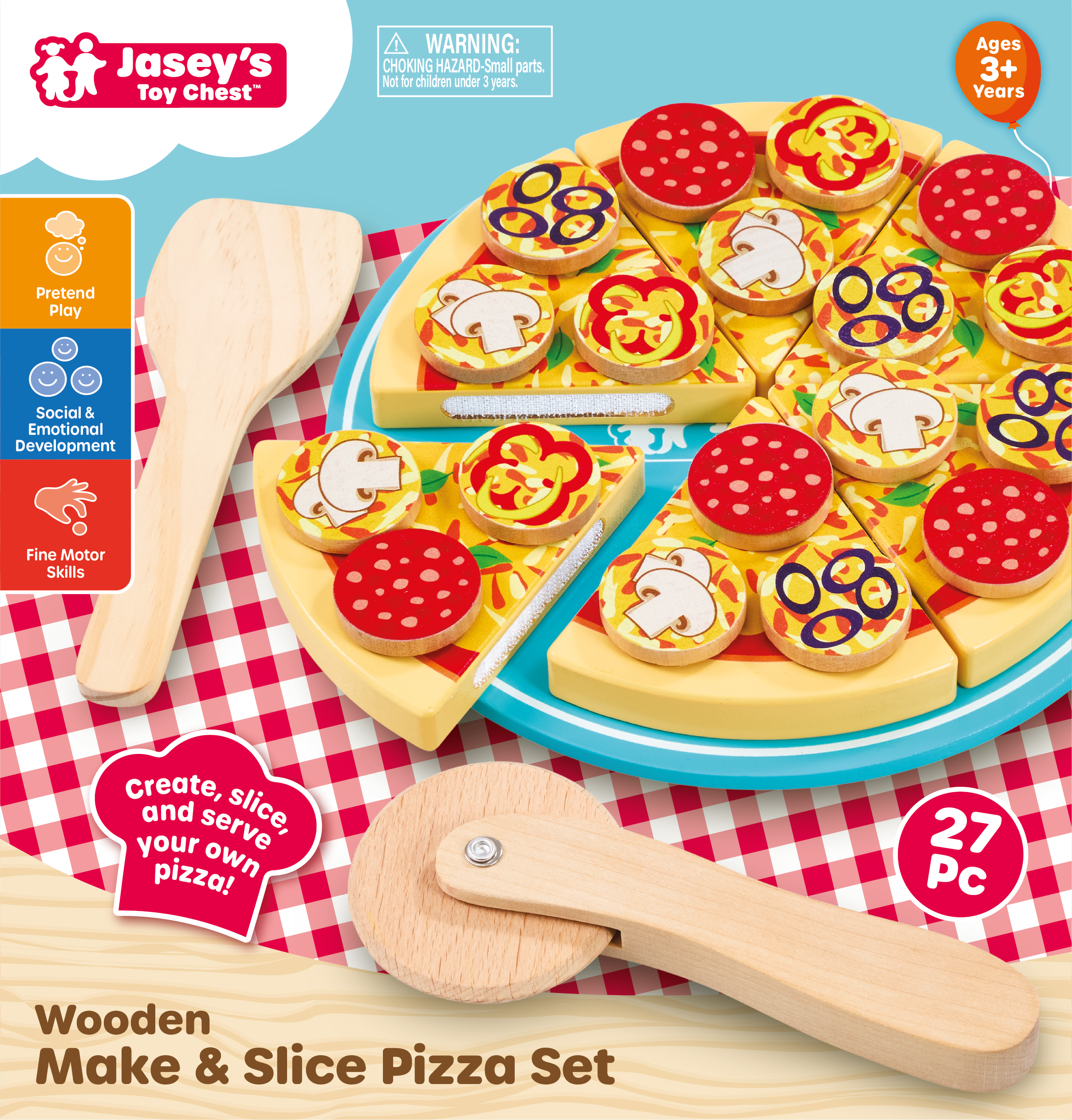
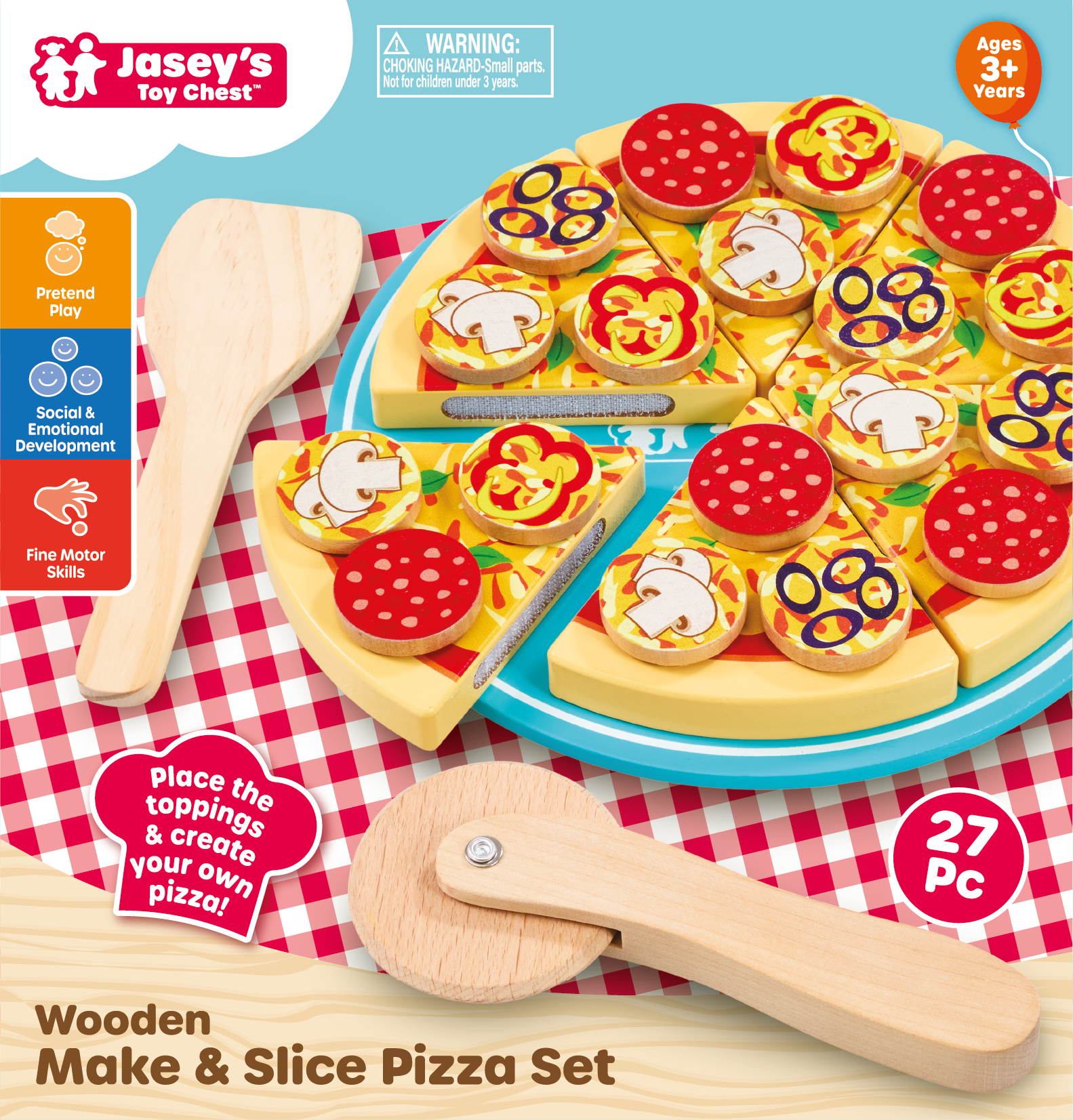
Wooden Make & Slice Pizza Set | 3+ Years
From our Pretend Play collection.
Skills: Social Awareness, Decision-Making, Handling Emotions
Design together.
Ask, "What toppings should we add today? Mushrooms, olives, or peppers?" Collaborating on choices builds teamwork and open communication.Wait for the oven.
Count together while you "wait for the oven timer." This teaches self-regulation and helps children learn to enjoy calm pauses.Slice with focus.
Encourage slow, steady movements with the cutter: "Let's slice carefully so everyone gets a piece." Mindful, deliberate actions promote concentration and body awareness.Share the slices.
Take turns serving and say, "One for you, one for me!" Turn-taking and generosity reinforce empathy and connection.Celebrate the meal.
Clap and say, "That was delicious teamwork!" Acknowledging cooperation boosts confidence and joy in shared play. -
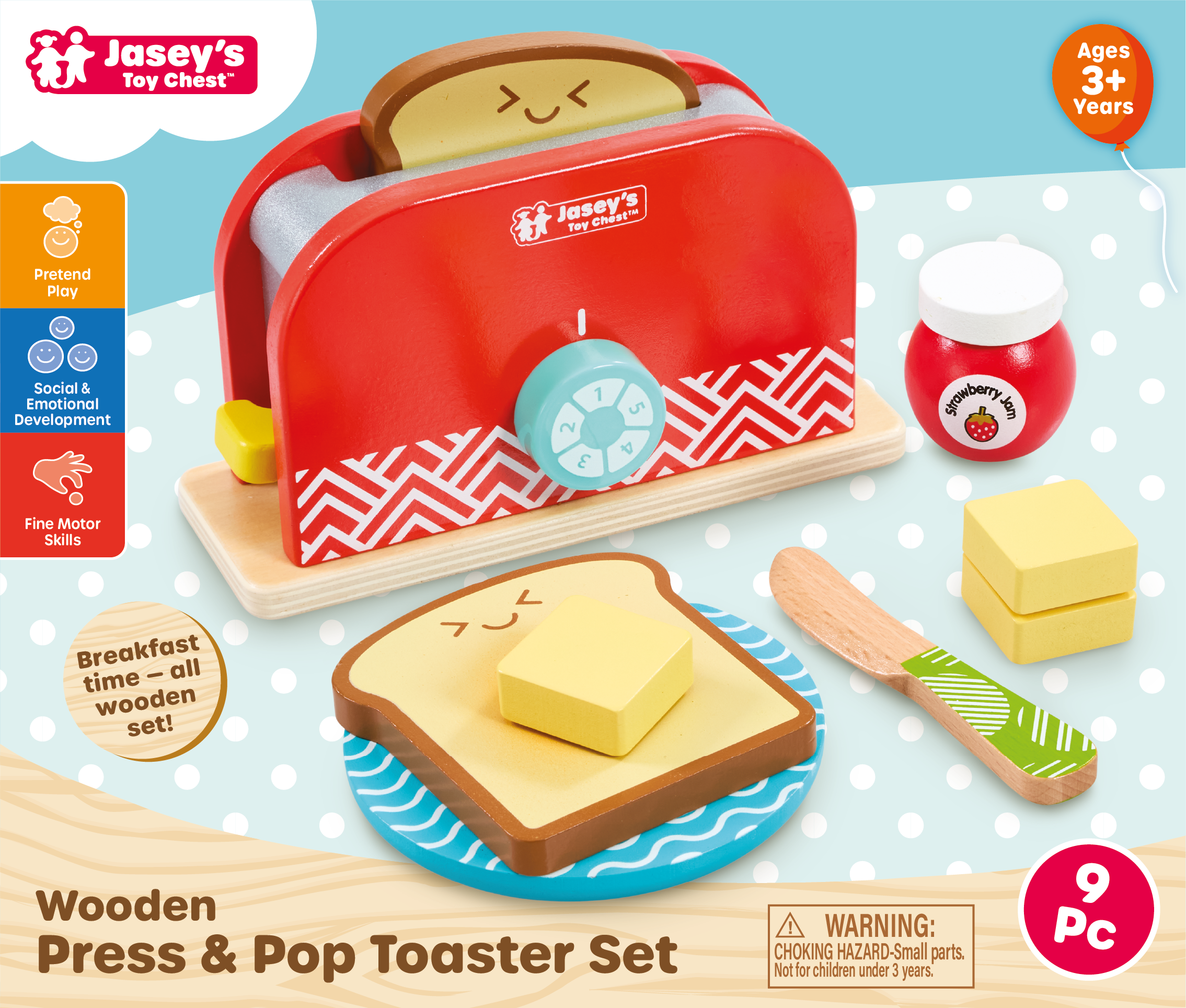
Wooden Press & Pop Toaster Set | 3+ Years
From our Pretend Play collection.
Skills: Independence, Mindfulness
Choose together.
Ask, "What kind of toast should we make today? Jam or butter?" Making small choices builds confidence and independence.Practice mindfulness.
Have your child turn the dial slowly and listen for the pop! Paying attention to sights and sounds helps develop focus and sensory awareness.Wait together.
While the toast "cooks," count together: "One... two... three!" Practicing waiting calmly builds patience and emotional control.Share with thanks.
Take turns serving breakfast and say, "Thank you for making me toast!" Expressing thanks encourages empathy and social warmth.Celebrate the moment.
Clap when the toast pops up: "Perfectly toasted!" Finding joy in small successes fosters positivity and connection. -
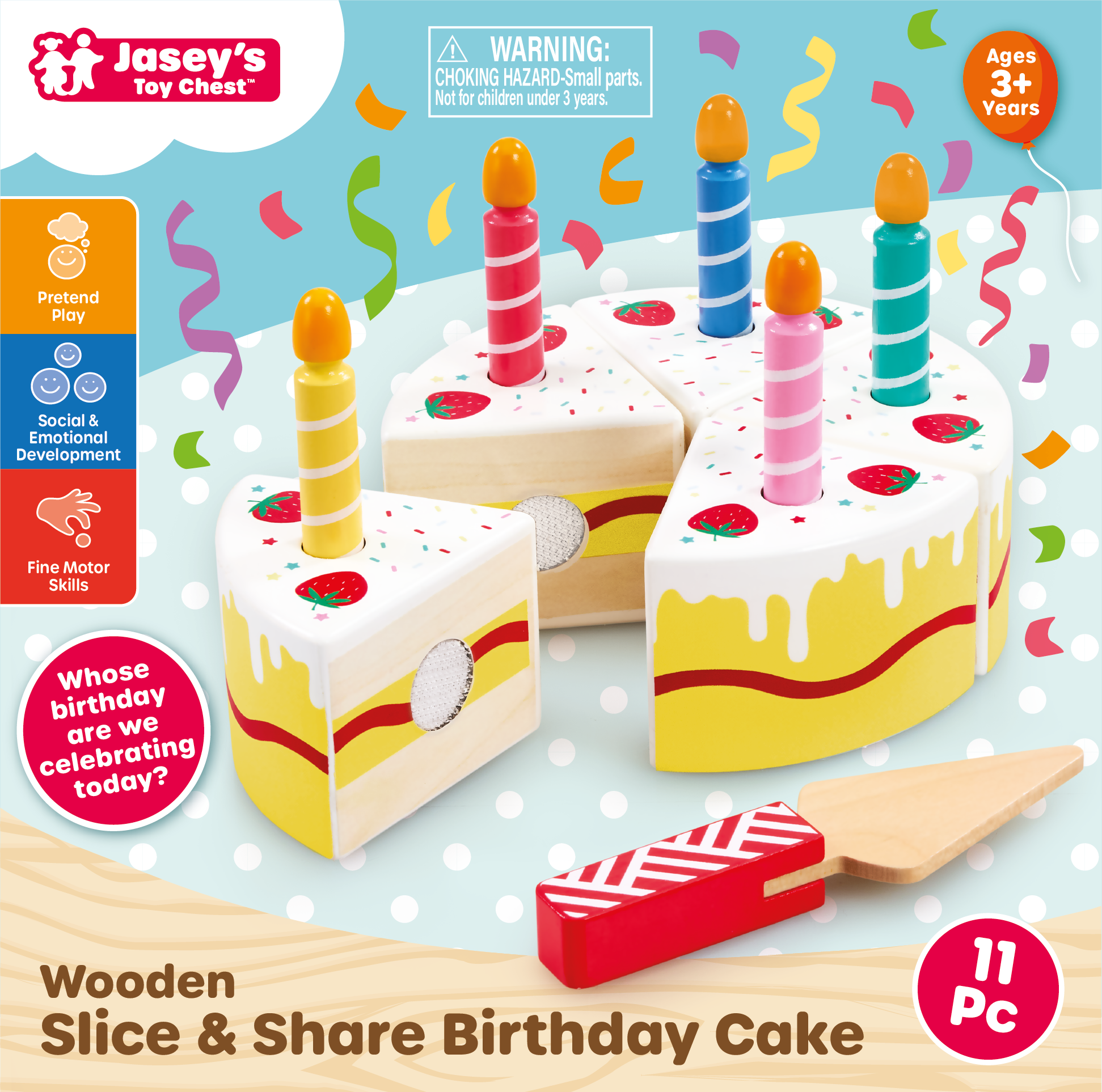
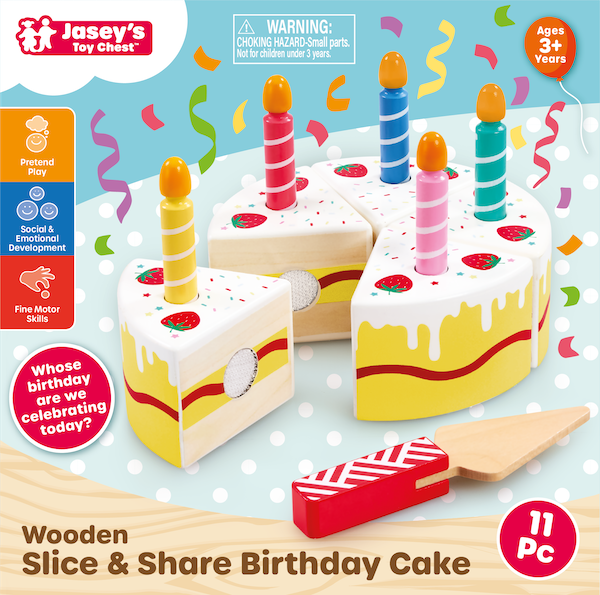
Wooden Slice & Share Birthday Cake | 3+ Years
From our Pretend Play collection.
Skills: Decision-Making, Social Awareness
Make it a celebration.
Ask, "Whose birthday should we celebrate today?" Maybe a favorite toy, a family member, or your child! Pretend celebrations help children express love, joy, and inclusion.Share the slices.
Encourage your child to offer slices to others: "Who would like the first piece?" This teaches generosity, empathy, and the joy of giving.Add words of affirmation.
When your child serves you cake, say, "Thank you for sharing. That was so thoughtful." Hearing gratitude builds pride and reinforces positive social behavior.Make wishes together.
Take turns "blowing out" candles while naming a happy thought or wish. This simple ritual encourages optimism and mindfulness.End with reflection.
As you tidy up, say, "That was such a fun party we made together!" This helps children practice closure and feel good about shared experiences. -
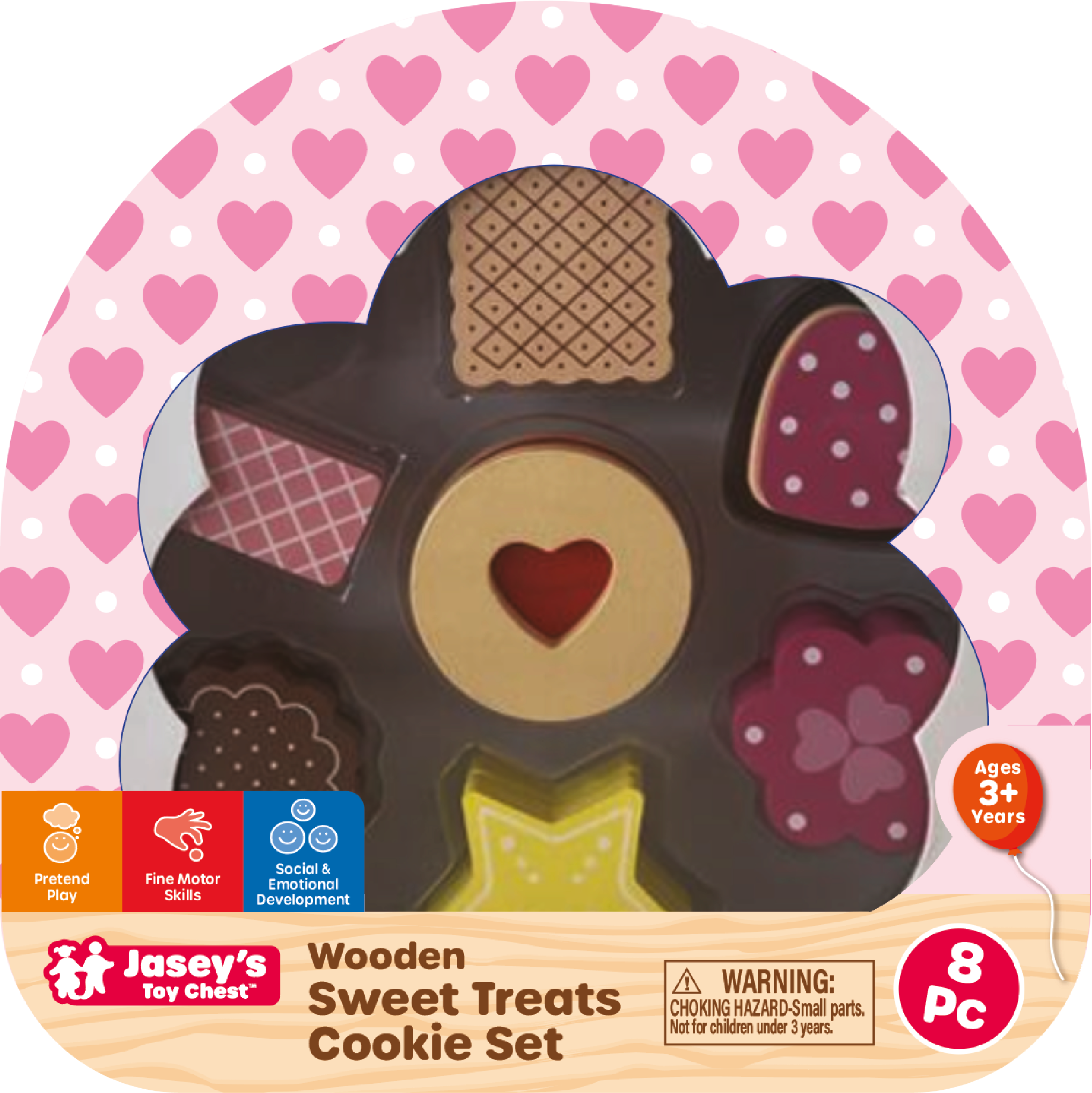
Wooden Sweet Treats Cookie Set | 3+ Years
From our Pretend Play collection.
Skills: Problem-Solving, Decision-Making, Social Awareness
Pick and share your favorite.
Ask, "Which cookie should we share first?" Taking turns choosing and serving teaches generosity and patience.Bake with imagination.
Pretend to have a gathering with friends, dolls, or stuffed animals where you share your treats. Shared storytelling fosters creativity and emotional connection.Talk about kindness.
As you play, say things like, "It feels good to give a treat, doesn't it?" This encourages empathy and positive social interaction.End with gratitude.
When the last cookie is "served," say, "Thank you for baking with me. That was so sweet!" This affirms warmth, connection, and appreciation. -
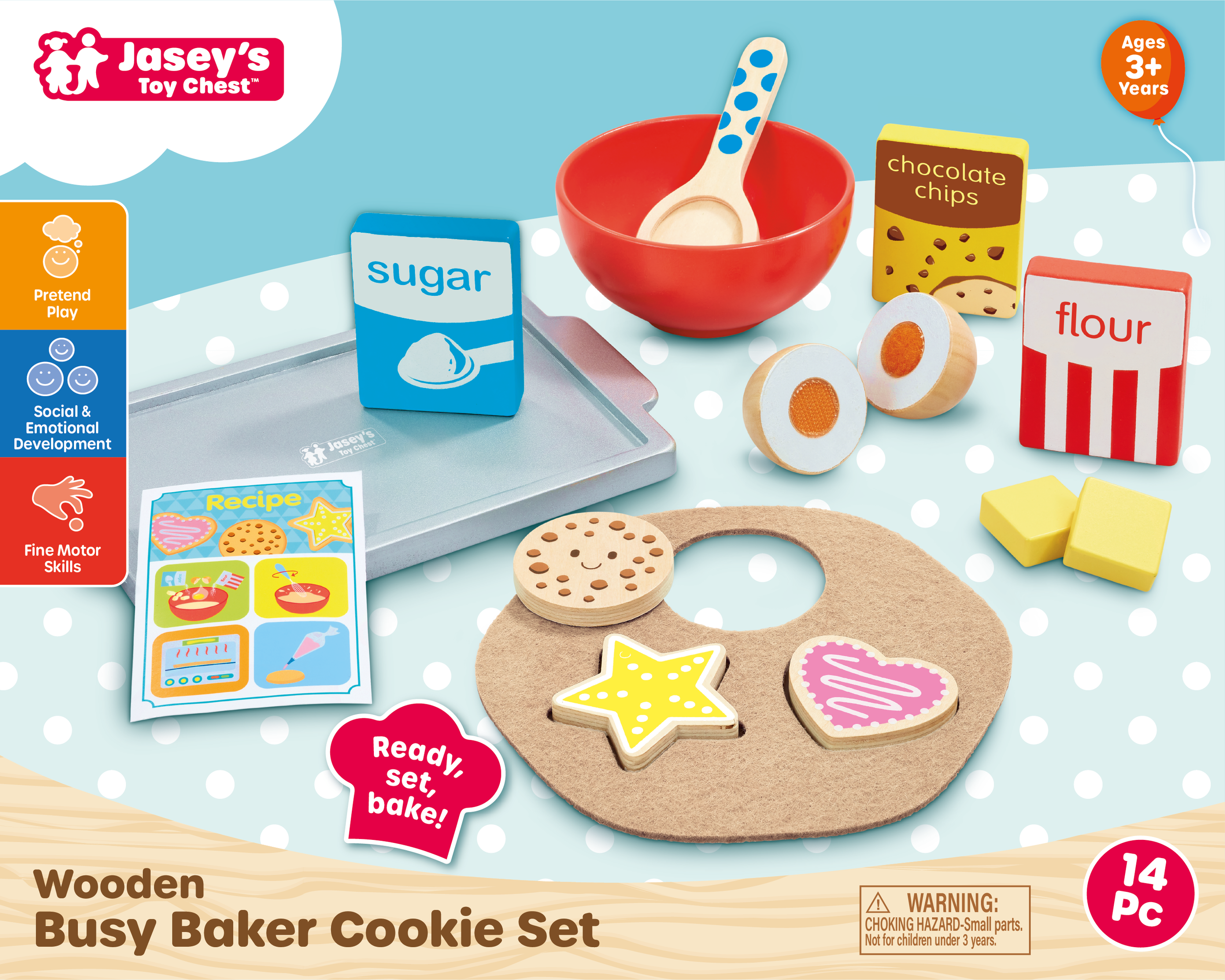
Wooden Busy Baker Cookie Set | 3+ Years
From our Pretend Play collection.
Skills: Social Awareness, Mindfulness, Problem-Solving
Mix with mindfulness.
Encourage your child to stir slowly while counting out loud: "One... two... three turns." The steady rhythm of stirring helps calm the body and focus the mind.Bake with purpose.
Ask, "Who are we baking for today?" A friend, a sibling, or a favorite toy. Thinking of others builds empathy and social awareness.Follow the recipe.
Work through the recipe card together, celebrating each small success: "We cracked the egg!" Following simple steps reinforces focus and a sense of accomplishment.Celebrate the creation.
When the cookies are done, enjoy a pretend taste and say, "You worked so hard. They're perfect!" This builds confidence and joy in the process, not just the result. -
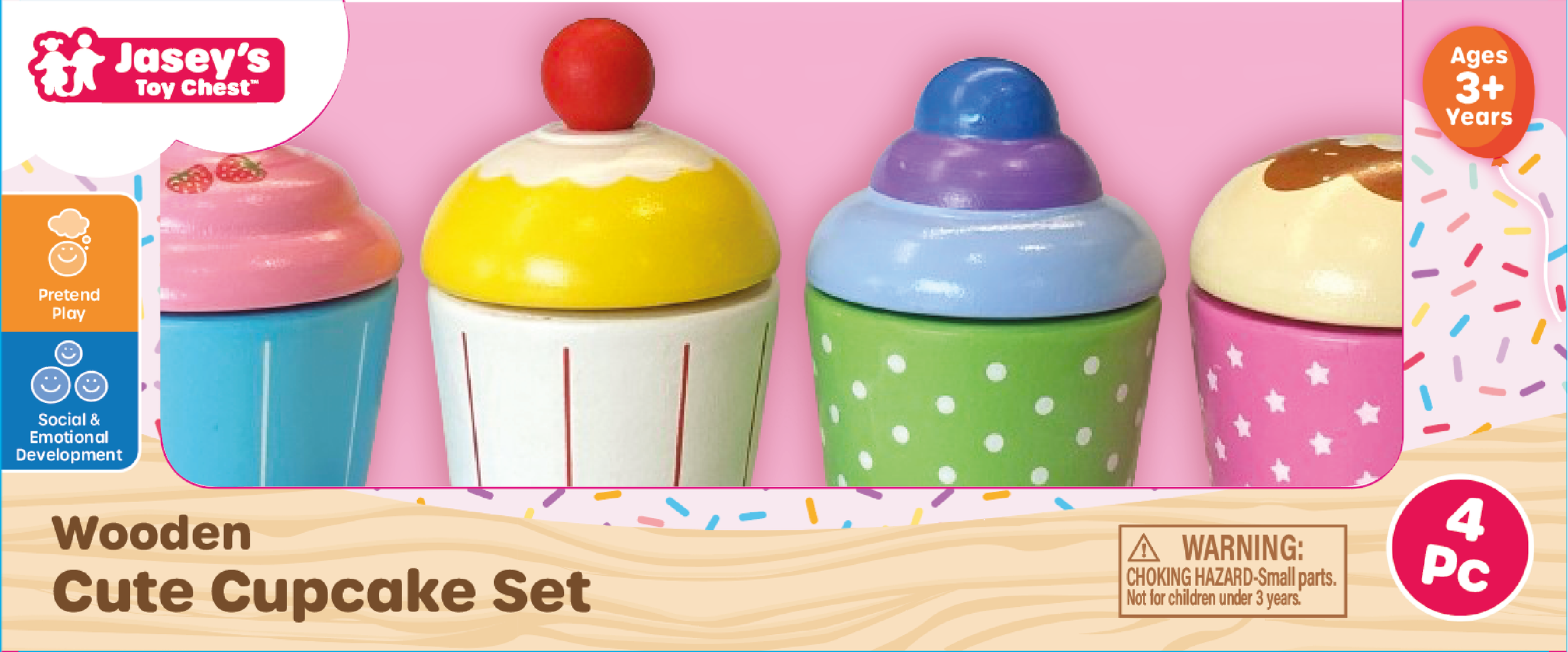
Wooden Cute Cupcake Set | 3+ Years
From our Pretend Play collection.
Skills: Decision-Making, Social Awareness
Mix and match.
Invite your child to design their dream cupcakes: rainbow sprinkles or chocolate swirl? This encourages open-ended creativity and decision-making.Play bakery together.
Take turns being the baker and the customer: "Welcome to my cupcake shop!" Role play builds communication skills and social confidence.Celebrate their creations.
When their cupcakes are complete, admire them together: "You made such fun designs!" Affirming effort builds confidence and pride in their ideas.Slow down and savor.
Pretend to "taste" each cupcake with a deep breath and smile. This moment of pause builds mindfulness and connection. -
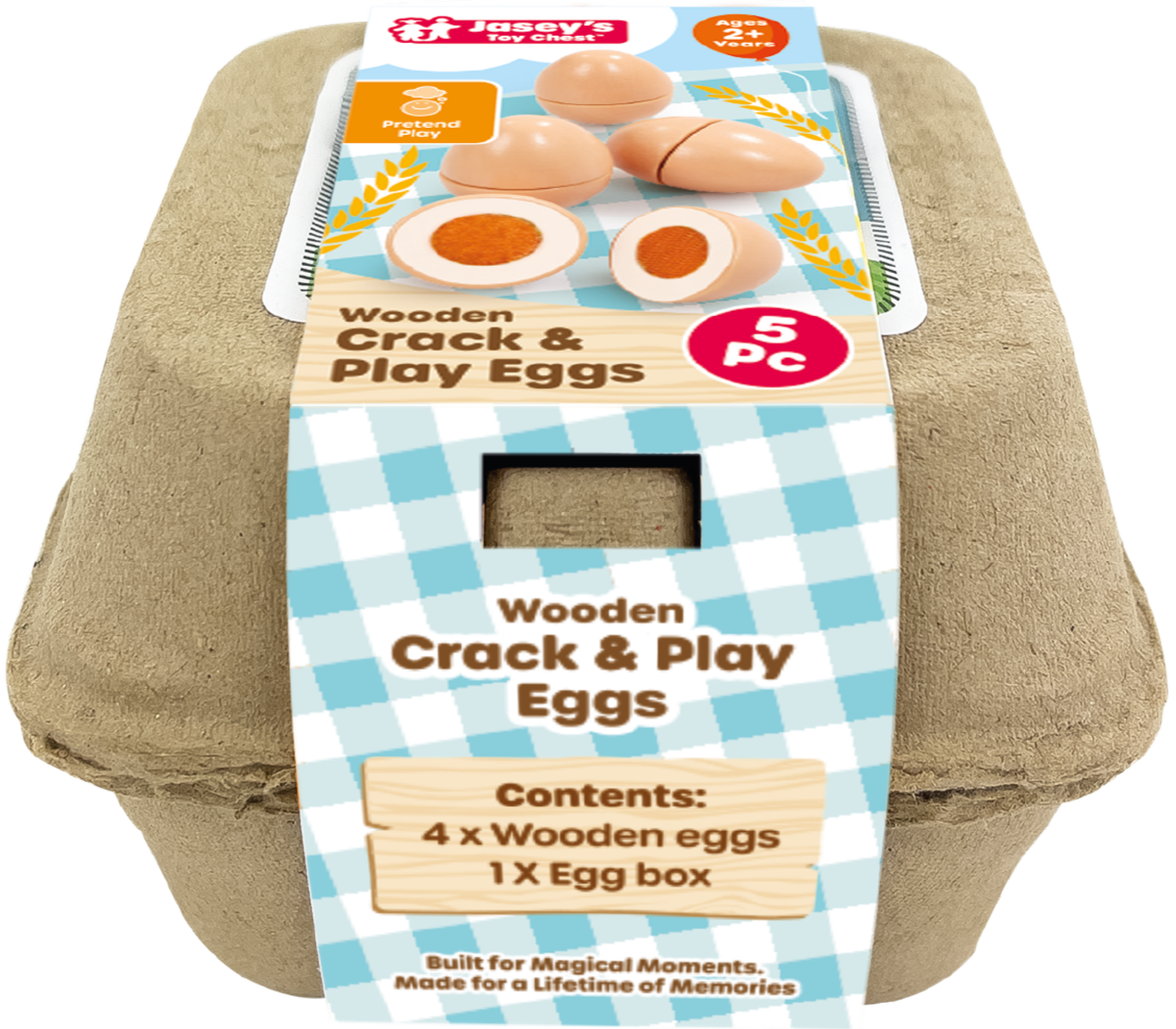
Wooden Crack & Play Eggs | 2+ Years
From our Pretend Play collection.
Skills: Independence, Problem-Solving, Mindfulness
Crack with care.
Encourage your child to tap and gently open each egg, noticing the sound and feel. Practicing calm, careful movements builds focus and mindfulness.Talk about what's inside.
Ask, "What do you see in your egg?" or "What could we make with it?" Open-ended questions foster curiosity, language, and flexible thinking.Make-believe snack.
Take turns "cooking" and serving: "Would you like scrambled or sunny-side up?" Pretend cooking nurtures communication, social connection, and empathy.Celebrate the little chef.
Say, "You cracked that egg so gently!" or "You're such a careful cook." Positive reinforcement builds confidence and pride in small achievements.End with tidy-up time.
Encourage putting eggs back in the carton and closing the lid. This closing ritual teaches organization and calm transitions between play and rest. -
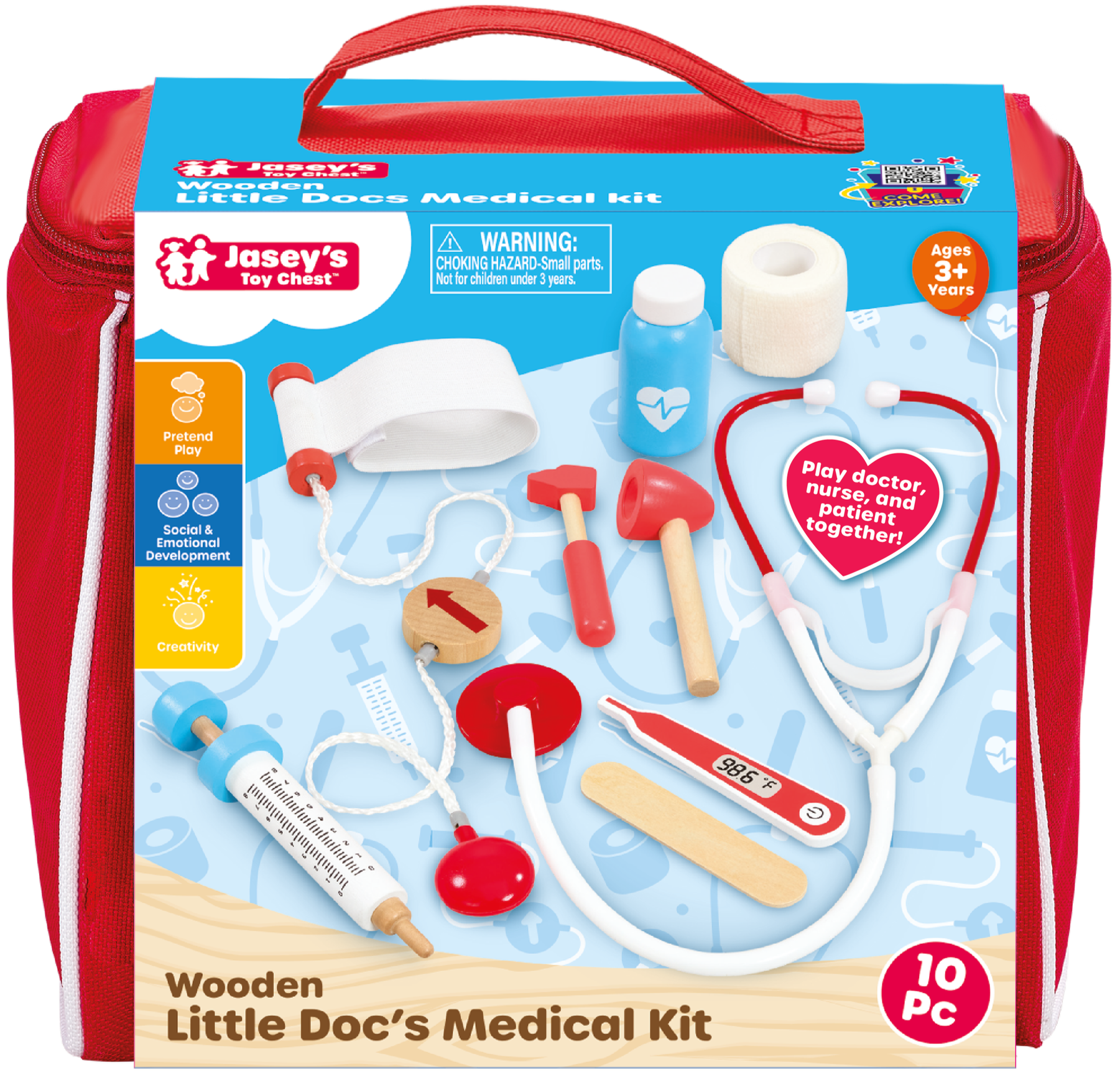
Wooden Little Doc's Medical Kit | 3+ Years
From our Pretend Play collection.
Skills: Decision-Making, Social Awareness, Handling Emotions
Play doctor together.
Invite your child to take your temperature, listen to your heartbeat, or give a teddy bear a check-up. Role reversal helps them understand compassion and the joy of helping others.Talk through feelings.
Ask, "How does our patient feel today: happy, tired, or a little worried?" and "How do you feel when you go to the doctor?" Naming emotions in play builds emotional literacy and understanding.Practice calm care.
Model gentle movements: "Let's take a deep breath while we give the shot." Teaching calm focus during pretend care helps children regulate their emotions and might help them feel more comfortable with real doctor visits.Encourage helping language.
Say things like, "You made the patient feel better!" or "That was so kind of you." Positive reinforcement builds empathy and self-worth.End with gratitude.
After the check-up, thank your little doctor: "Thanks for taking such good care of me." Showing appreciation reinforces kindness and connection. -
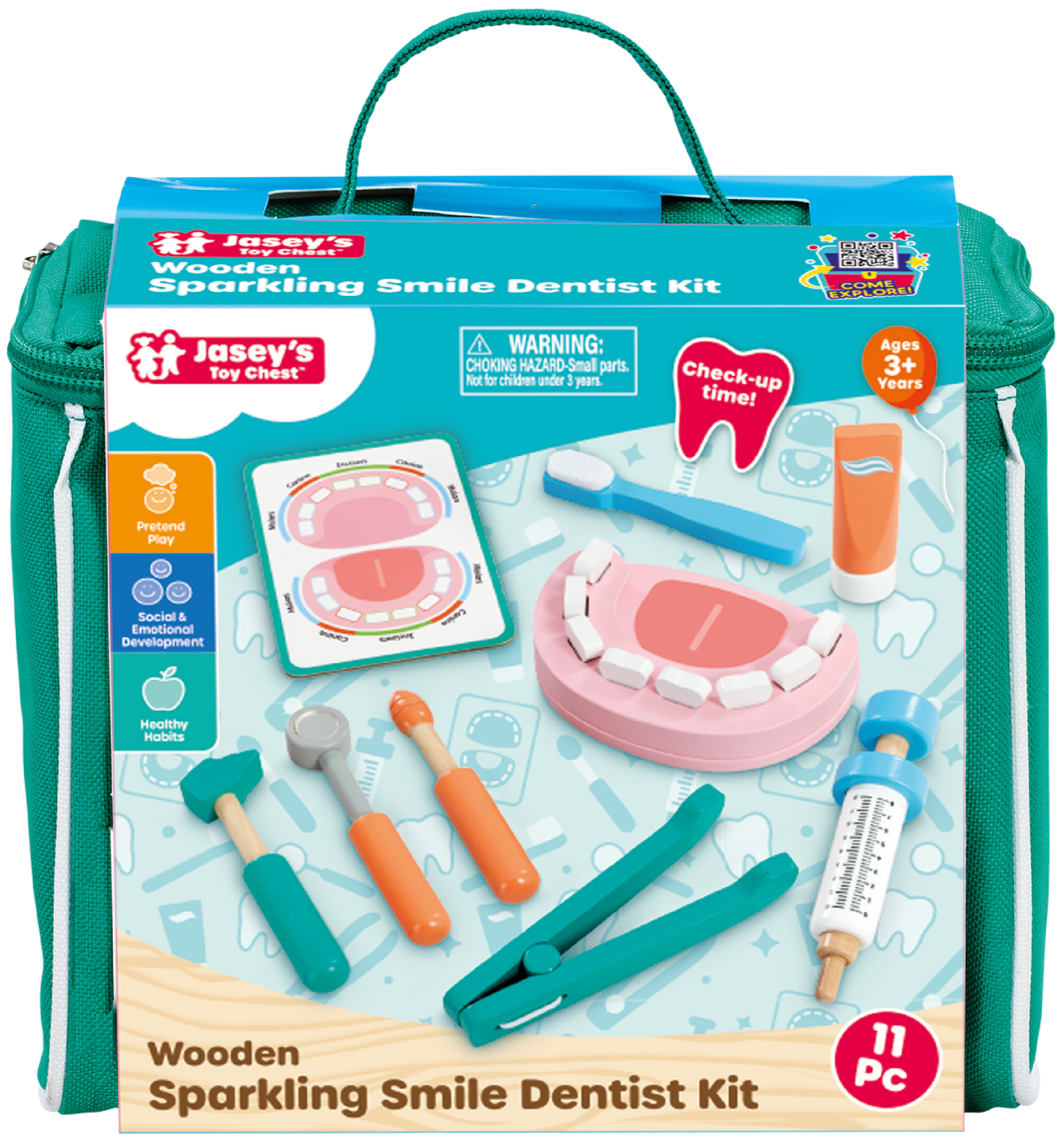
Wooden Sparkling Smile Dentist Kit | 3+ Years
From our Pretend Play collection.
Skills: Decision-Making, Handling Emotions, Social Awareness
Play dentist with kindness.
Invite your child to check your teeth or a stuffed animal's smile. Practicing gentle care nurtures empathy and helps children process their own dentist experiences.Talk about feelings.
Ask, "How does the patient feel: a little nervous or brave?" and "How do you feel when you go to the dentist?" Discussing emotions in pretend play helps children build confidence and awareness around real-life situations.Encourage calm care.
Model a steady voice and soft tone as you "fix" a tooth or "clean" a smile. Teaches children that calm actions can help others feel safe and cared for.Take turns being patient and dentist.
Switching roles helps develop perspective-taking and cooperation.Celebrate healthy smiles.
After play, say, "Look at those sparkling teeth. Great teamwork!" Recognizing shared effort builds connection, confidence, and pride. -
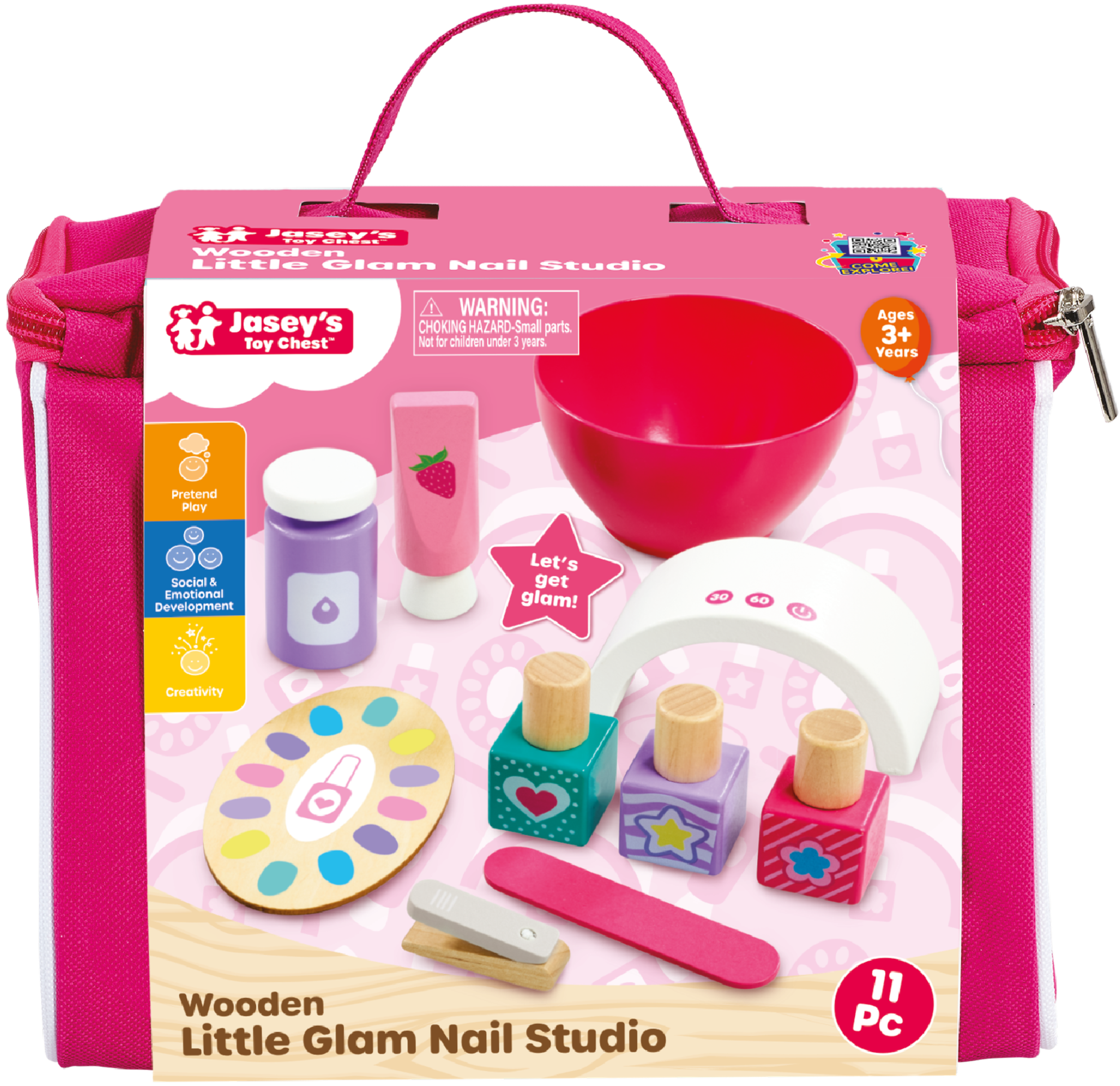
Wooden Little Glam Nail Studio | 3+ Years
From our Pretend Play collection.
Skills: Independence, Problem-Solving, Social Awareness
Take it slow.
Invite your child to take slow, gentle breaths while they "paint" each nail. Practicing stillness and focus builds mindfulness and patience.Express creativity through color.
Ask, "What shade matches your mood?" This helps kids pause and think about how they're feeling.Model caring touch.
Take turns giving pretend hand massages or applying lotion with soft, kind motions. Gentle touch nurtures empathy and connection.Encourage pride in their work.
After finishing, admire their designs together: "You did that so carefully!" This reinforces confidence and attention to detail.End with relaxation.
Pretend to let the nails "dry" while resting quietly side by side. This helps children practice winding down and being present. -
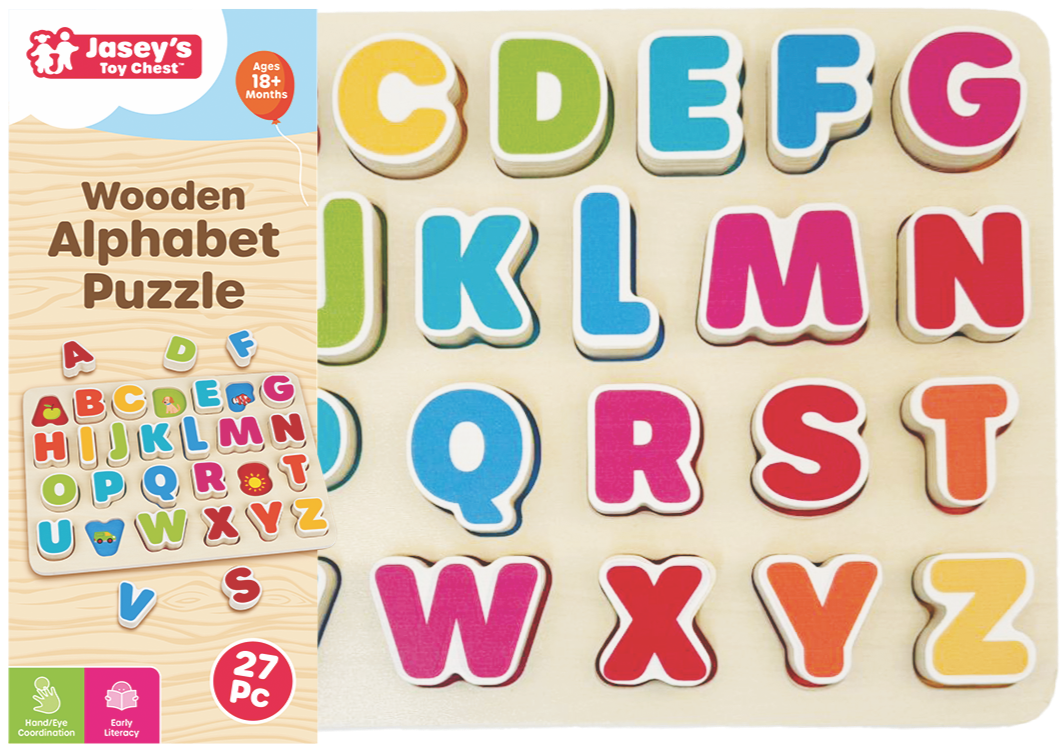
Wooden Alphabet Puzzle | 18+ Months
From our Wooden Puzzles collection.
Skills: Problem-Solving, Independence, Handling Emotions
Let them explore.
Let your child pick up the letters and discover the pictures underneath. Giving them space to explore builds curiosity and independence.Name what you see.
As they lift each letter, point out the picture: "Look, A is for Apple!" Connecting letters to objects builds early literacy and language skills.Connect together.
Ask, "What's your favorite letter?" Brainstorm words that start with that letter. Exploring preferences helps children discover their own identity.Model patience.
If a piece doesn't fit, take a deep breath together and try again. Showing calm during problem-solving helps them handle frustration.Celebrate the effort.
When the puzzle is done, stand back and admire it together: "You worked so hard!" or "You kept trying even when it was tricky!" Praising the process builds pride and perseverance. -
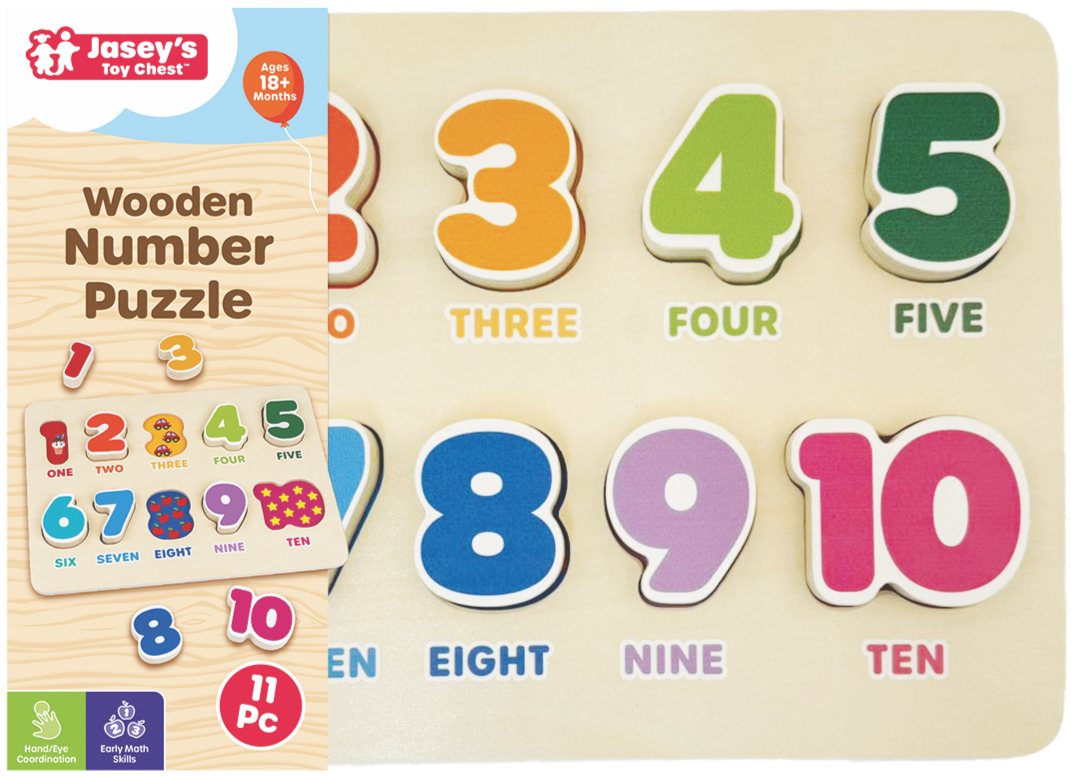
Wooden Number Puzzle | 18+ Months
From our Wooden Puzzles collection.
Skills: Problem-Solving, Independence, Handling Emotions
Let them explore.
Let your child pick up the numbers and discover the objects underneath. Giving them space to explore builds curiosity and independence.Count what you see.
As they lift each number, count the objects together: "Look, two butterflies! One, two!" Counting builds early math skills and focus.Connect together.
Ask, "What's your favorite number? What does that number make you think of?" Exploring preferences helps children discover their own identity.Model patience.
If a piece doesn't fit, take a deep breath together and try again. Showing calm during problem-solving helps them handle frustration.Celebrate the effort.
When the puzzle is done, stand back and admire it together: "You worked so hard!" or "You kept trying even when it was tricky!" Praising the process builds pride and perseverance. -
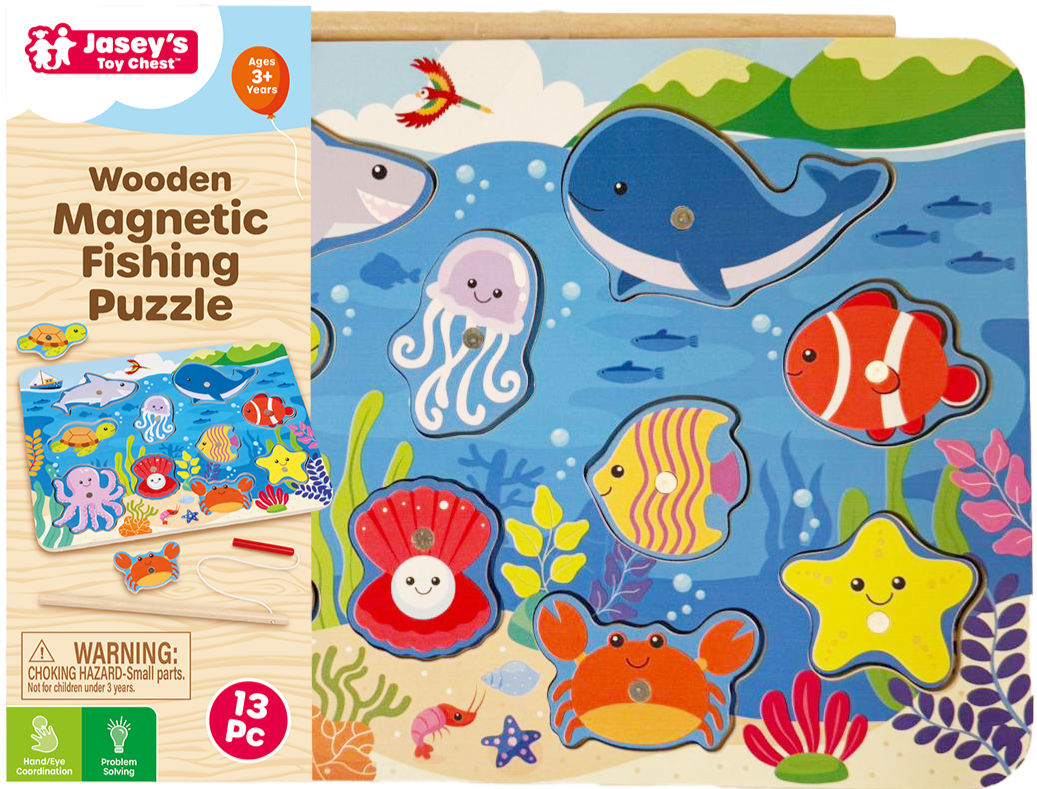
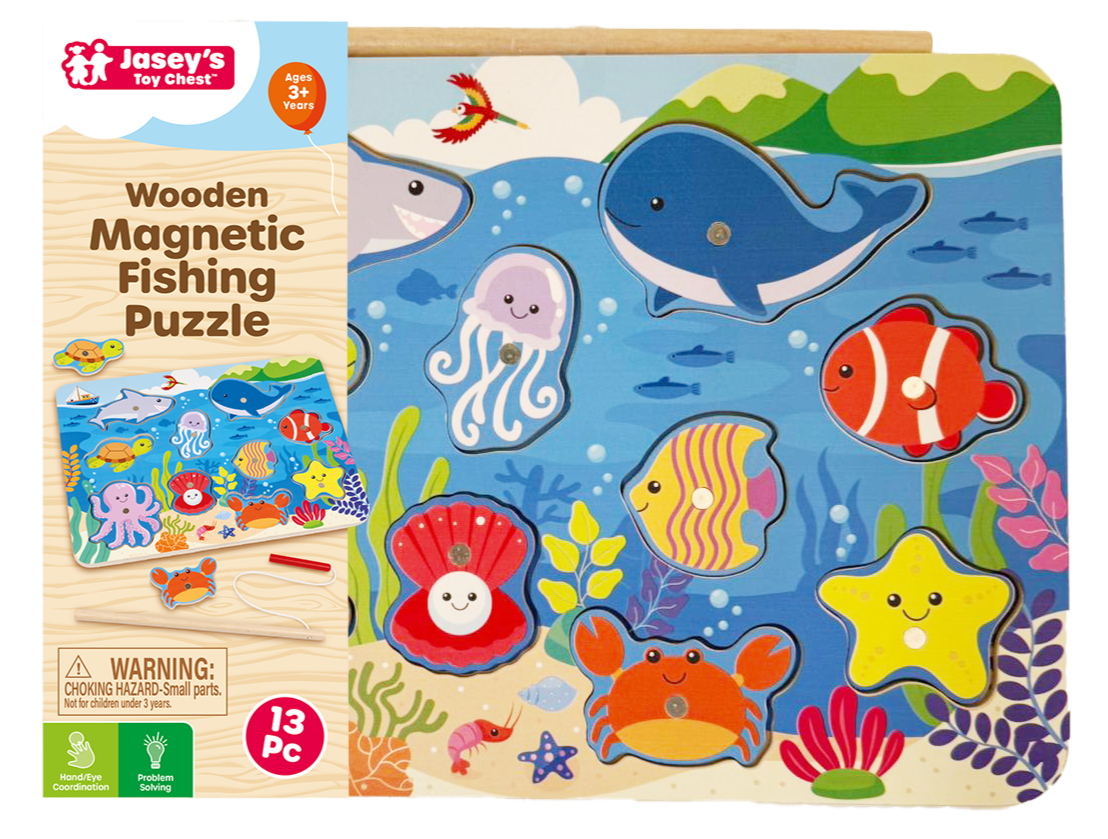
Wooden Magnetic Fishing Puzzle | 3+ Years
From our Wooden Puzzles collection.
Skills: Problem-Solving, Independence, Handling Emotions
Go fishing.
Let your child use the magnetic rod to "catch" each ocean creature. Taking turns builds patience and cooperation.Name what you catch.
As they lift each piece, point out the creature: "You caught a starfish!" Naming builds language and focus.Connect together.
Ask, "Which ocean animal is your favorite?" or "Would you want to swim with a dolphin?" Exploring preferences helps children discover their own identity.Model patience.
If the magnet doesn't catch right away, take a deep breath together and try again. Showing calm during tricky moments helps them handle frustration.Celebrate the effort.
When all the pieces are caught, admire the puzzle together: "You worked so hard!" or "You kept trying even when it was tricky!" Praising the process builds pride and perseverance. -
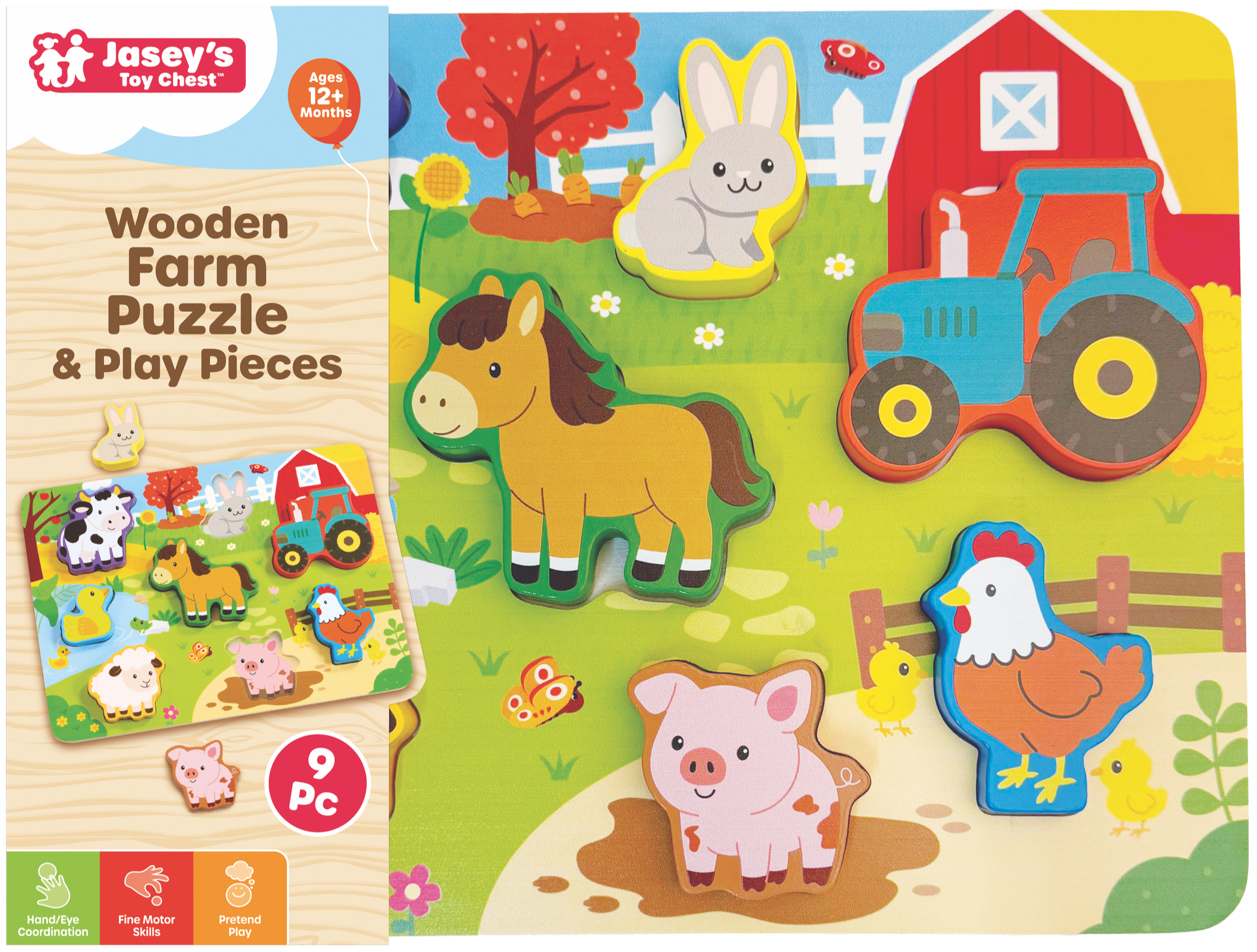
Wooden Farm Puzzle & Play Pieces | 12+ Months
From our Wooden Puzzles collection.
Skills: Problem-Solving, Independence, Handling Emotions
Let them explore.
Let your child pick up each animal and find where it belongs. Giving them space to explore builds curiosity and independence.Name the animals.
As they lift each piece, point out the animal: "That's a pig!" or "Can you find the bunny?" Naming builds language and focus.Act out stories.
Use the chunky animal pieces to play pretend: "Where is the pig going today?" or "What does the horse say to the chicken?" Storytelling builds imagination and emotional expression.Connect together.
Ask, "Which farm animal is your favorite?" or "Would you want a bunny as a pet?" Exploring preferences helps children discover their own identity.Model patience.
If a piece doesn't fit, take a deep breath together and try again. Showing calm during problem-solving helps them handle frustration.Celebrate the effort.
When the puzzle is done, stand back and admire it together: "You worked so hard!" or "You kept trying even when it was tricky!" Praising the process builds pride and perseverance. -
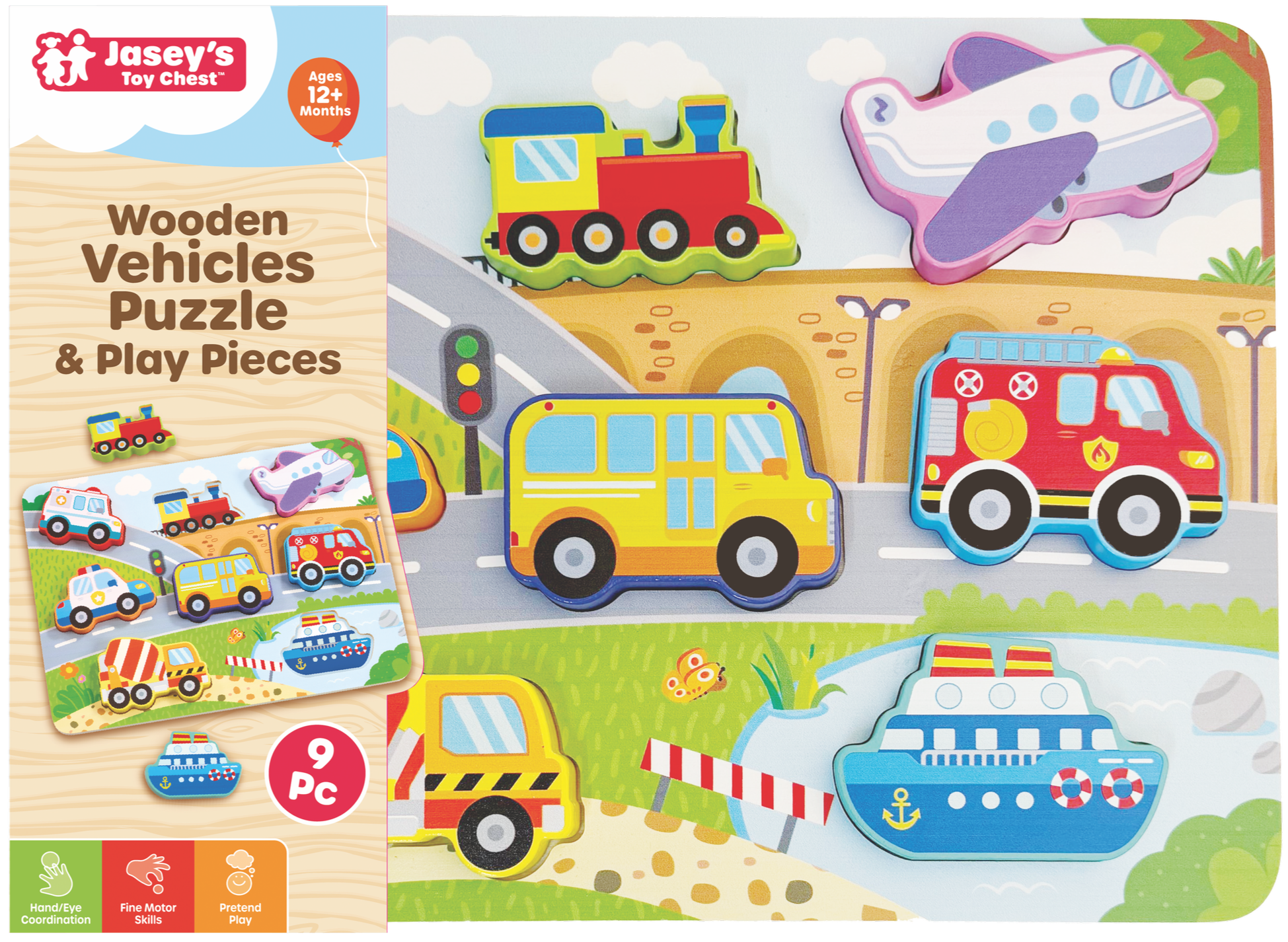
Wooden Vehicles Puzzle & Play Pieces | 12+ Months
From our Wooden Puzzles collection.
Skills: Problem-Solving, Independence, Handling Emotions
Let them explore.
Let your child pick up each vehicle and find where it belongs. Giving them space to explore builds curiosity and independence.Name the vehicles.
As they lift each piece, point out the vehicle: "That's a fire truck!" or "Can you find the bus?" Naming builds language and focus.Act out stories.
Use the chunky vehicle pieces to play pretend: "Where is the ambulance going?" or "Who's riding on the train today?" Storytelling builds imagination and emotional expression.Connect together.
Ask, "Which vehicle is your favorite?" or "Would you want to drive a fire truck?" Exploring preferences helps children discover their own identity.Model patience.
If a piece doesn't fit, take a deep breath together and try again. Showing calm during problem-solving helps them handle frustration.Celebrate the effort.
When the puzzle is done, stand back and admire it together: "You worked so hard!" or "You kept trying even when it was tricky!" Praising the process builds pride and perseverance. -
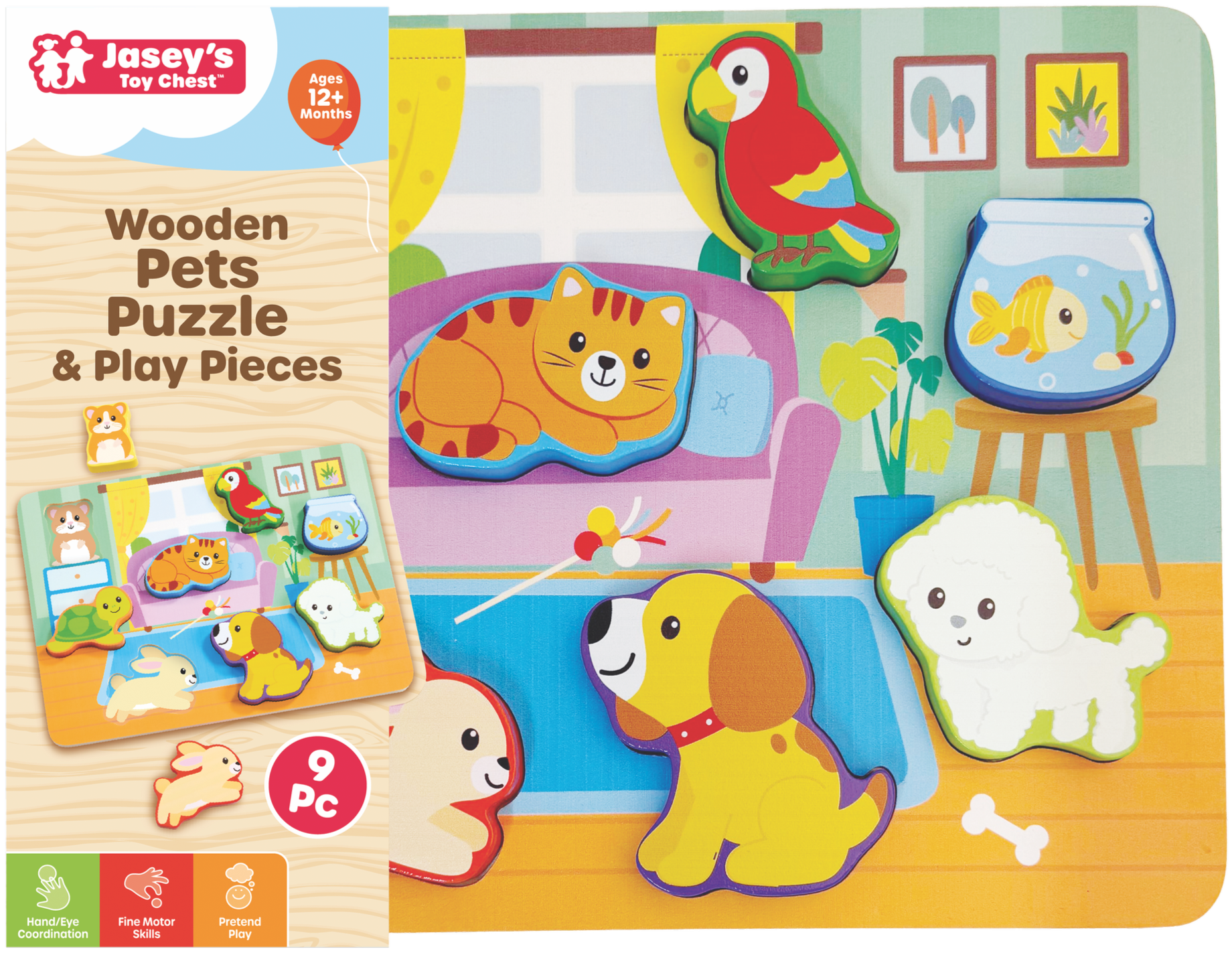
Wooden Pets Puzzle & Play Pieces | 12+ Months
From our Wooden Puzzles collection.
Skills: Problem-Solving, Independence, Handling Emotions
Let them explore.
Let your child pick up each pet and find where it belongs. Giving them space to explore builds curiosity and independence.Name the pets.
As they lift each piece, point out the pet: "That's a parrot!" or "Can you find the hamster?" Naming builds language and focus.Act out stories.
Use the chunky pet pieces to play pretend: "What is the cat doing today?" or "Is the dog going for a walk?" Storytelling builds imagination and emotional expression.Connect together.
Ask, "Which pet is your favorite?" or "Would you want a fish or a hamster?" Exploring preferences helps children discover their own identity.Model patience.
If a piece doesn't fit, take a deep breath together and try again. Showing calm during problem-solving helps them handle frustration.Celebrate the effort.
When the puzzle is done, stand back and admire it together: "You worked so hard!" or "You kept trying even when it was tricky!" Praising the process builds pride and perseverance. -
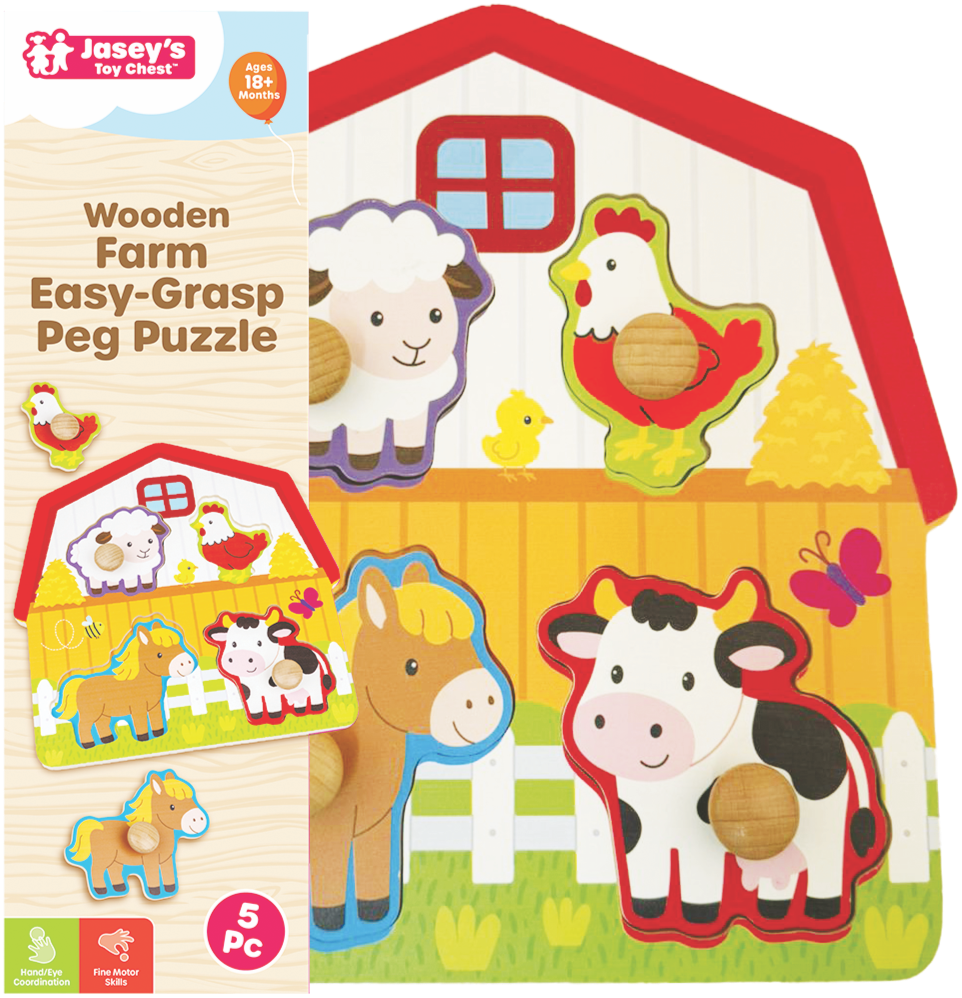
Wooden Farm Easy-Grasp Peg Puzzle | 18+ Months
From our Wooden Puzzles collection.
Skills: Problem-Solving, Independence, Handling Emotions
Let them explore.
Let your child pick up each animal and find where it belongs. Giving them space to explore builds curiosity and independence.Name the animals.
As they lift each piece, point out the animal: "That's a cow!" or "Can you find the chicken?" Naming builds language and focus.Connect together.
Ask, "Which farm animal is your favorite?" or "Would you want a chicken as a pet?" Exploring preferences helps children discover their own identity.Model patience.
If a piece doesn't fit, take a deep breath together and try again. Showing calm during problem-solving helps them handle frustration.Celebrate the effort.
When the puzzle is done, stand back and admire it together: "You worked so hard!" or "You kept trying even when it was tricky!" Praising the process builds pride and perseverance. -
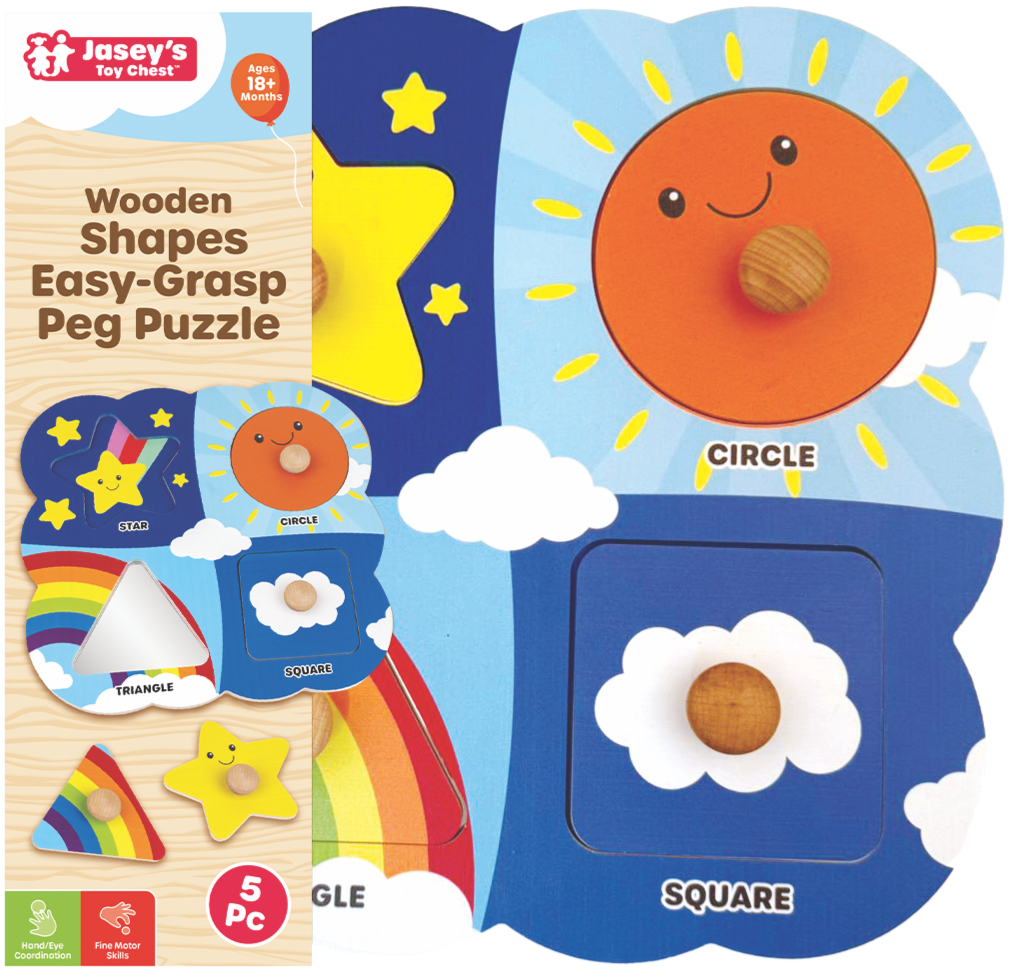
Wooden Shapes Easy-Grasp Peg Puzzle | 18+ Months
From our Wooden Puzzles collection.
Skills: Problem-Solving, Independence, Handling Emotions
Let them explore.
Let your child pick up the shapes and discover the mirror underneath! Giving them space to explore builds curiosity and independence.Name the shapes.
As they lift each piece, point out the shape: "That's a star!" or "Can you find the circle?" Naming builds language and focus.Model patience.
If a piece doesn't fit, take a deep breath together and try again. Showing calm during problem-solving helps them handle frustration.Celebrate the effort.
When the puzzle is done, stand back and admire it together: "You worked so hard!" or "You kept trying even when it was tricky!" Praising the process builds pride and perseverance. -
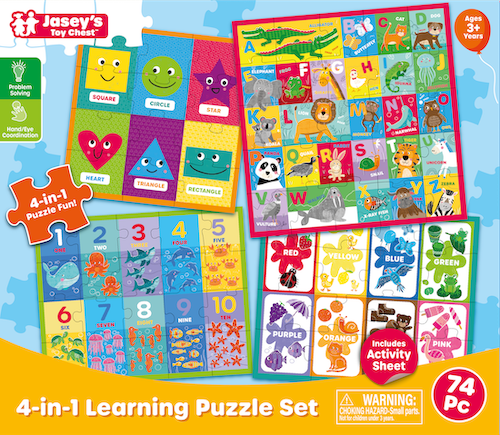
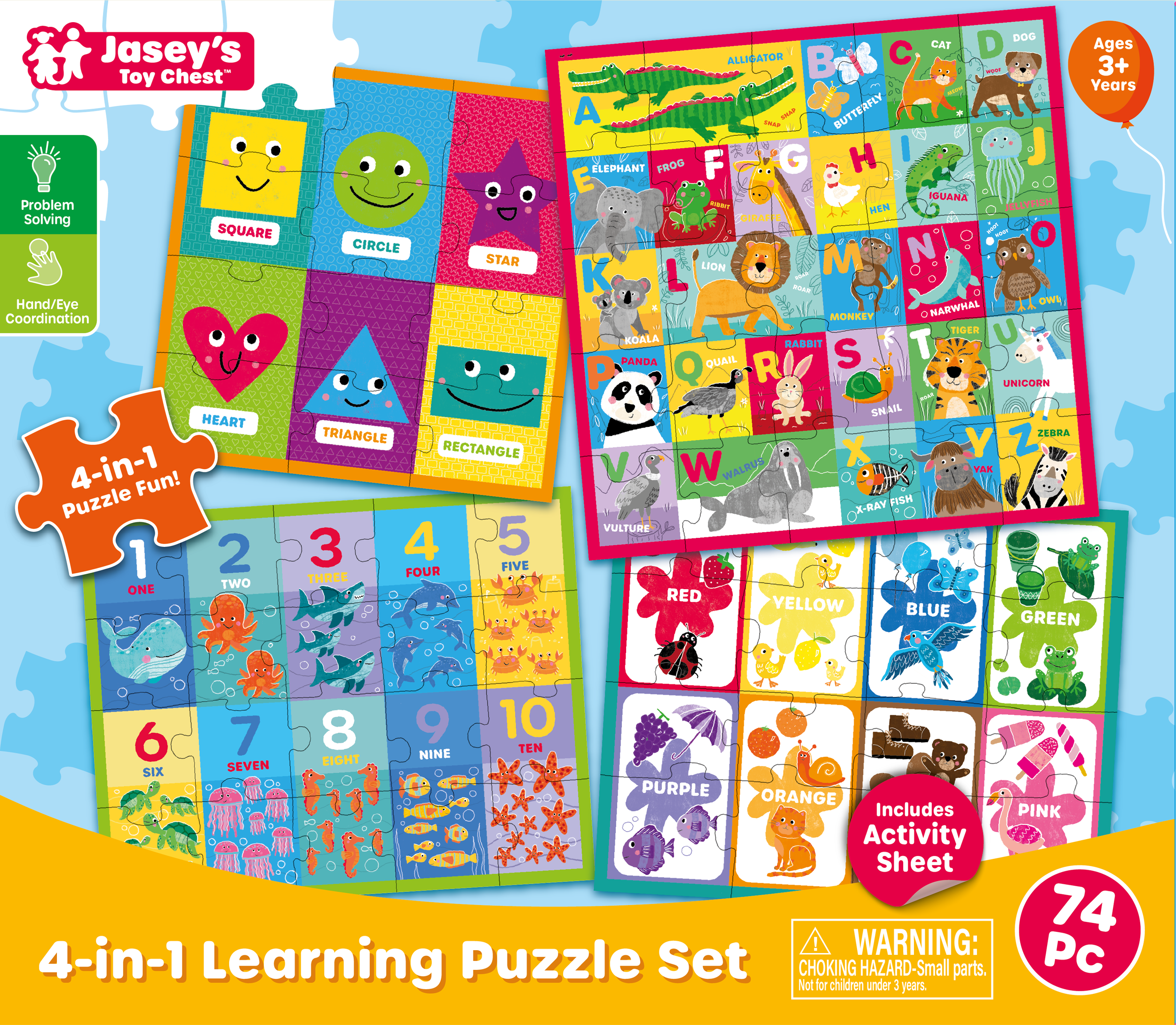
4-in-1 Learning Puzzle Set | 3+ Years
From our Cardboard Puzzles collection.
Skills: Problem-Solving, Independence, Handling Emotions
Start with one.
Let your child pick which puzzle to try first: shapes, colors, numbers, or letters. Giving choices builds confidence and independence.Build confidence.
Start with the smallest puzzle and work your way up. Completing each one builds confidence for the next challenge.Name what you see.
As they work, point out the pictures: "That's a yellow banana!" or "Look, A is for Alligator!" This builds focus and language skills.Model patience.
If a piece doesn't fit, take a deep breath together and try again. Showing calm during problem-solving helps them handle frustration.Celebrate the effort.
When the puzzle is done, stand back and admire it together: "You worked so hard!" or "You kept trying even when it was tricky!" Praising the process builds pride and perseverance. -
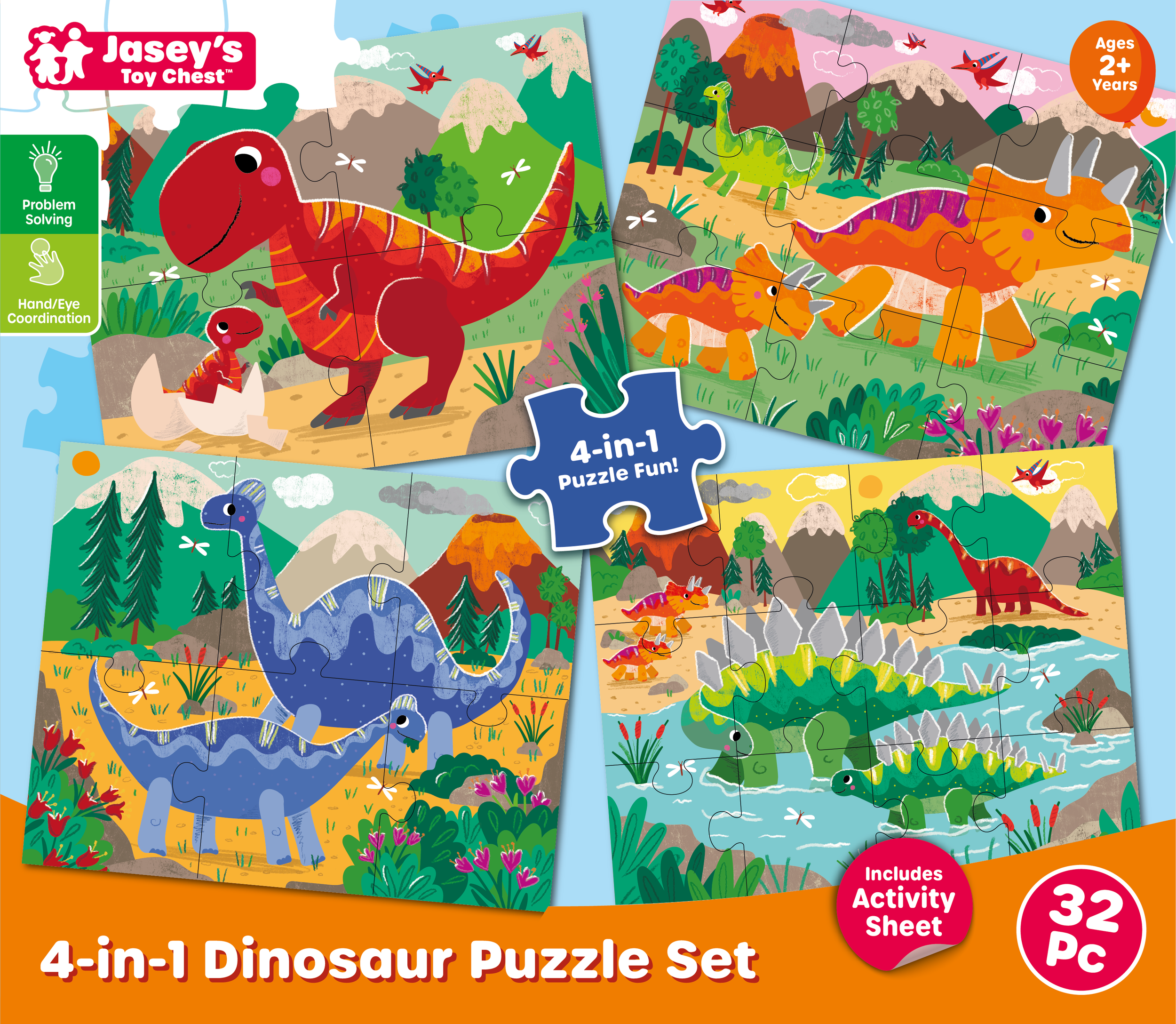
4-in-1 Dinosaur Puzzle Set | 2+ Years
From our Cardboard Puzzles collection.
Skills: Problem-Solving, Independence, Handling Emotions
Start with one.
Let your child choose which dinosaur puzzle to try first. Giving choices builds confidence and independence.Build confidence.
Start with the 4-piece puzzle and work your way up to 12. Completing each one builds confidence for the next challenge.Explore the activity sheet.
Ask the questions from the included activity sheet: "How many dinosaurs can you spot?" or "Can you give each dinosaur a name?" Counting and naming builds language and focus.Model patience.
If a piece doesn't fit, take a deep breath together and try again. Showing calm during problem-solving helps them handle frustration.Celebrate the effort.
When the puzzle is done, stand back and admire it together: "You worked so hard!" or "You kept trying even when it was tricky!" Praising the process builds pride and perseverance. -
4-in-1 Pet Friends Puzzle Set | 12+ Months
From our Cardboard Puzzles collection.
Skills: Problem-Solving, Independence, Handling Emotions
Start with one.
Let your child choose which pet puzzle to try first. Giving choices builds confidence and independence.Build confidence.
Start with the 2-piece puzzle and work your way up to 8. Completing each one builds confidence for the next challenge.Explore the activity sheet.
Ask the questions from the included activity sheet: "How many pets can you count?" or "Can you give each pet a name?" Counting and naming builds language and focus.Model patience.
If a piece doesn't fit, take a deep breath together and try again. Showing calm during problem-solving helps them handle frustration.Celebrate the effort.
When the puzzle is done, stand back and admire it together: "You worked so hard!" or "You kept trying even when it was tricky!" Praising the process builds pride and perseverance. -
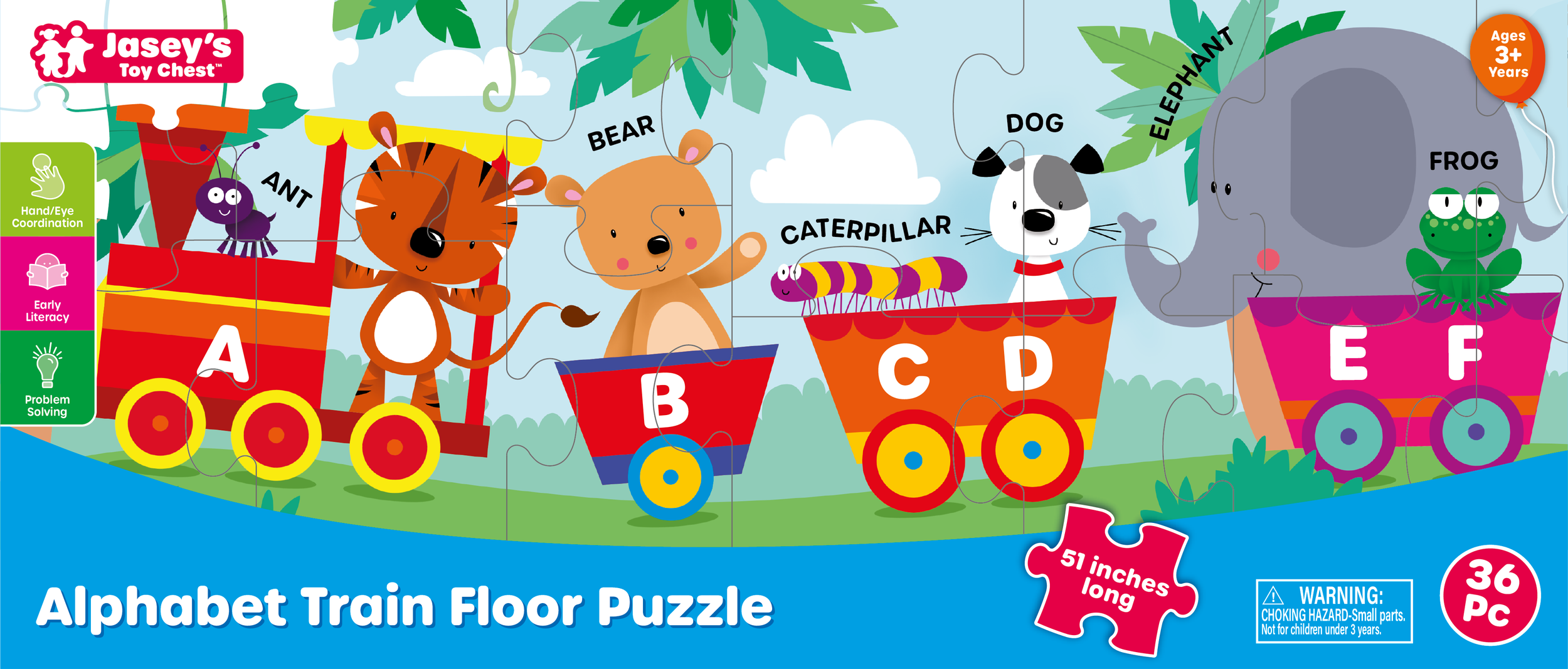
Alphabet Train Floor Puzzle | 3+ Years
From our Cardboard Puzzles collection.
Skills: Problem-Solving, Independence, Handling Emotions
Build the train together.
This 36-piece floor puzzle is big! Work on it side by side, taking turns placing pieces. Teamwork builds cooperation and connection.Name the animals.
As you build, point out the animals on each train car: "Look, B is for Bear!" Connecting letters to animals builds early literacy skills.Connect together.
Ask, "Which animal is your favorite?" or "What sound does the owl make?" Exploring preferences helps children discover their own identity.Model patience.
If a piece doesn't fit, take a deep breath together and try again. Showing calm during problem-solving helps them handle frustration.Celebrate the effort.
When the puzzle is done, stand back and admire it together: "You worked so hard!" or "You kept trying even when it was tricky!" Praising the process builds pride and perseverance. -
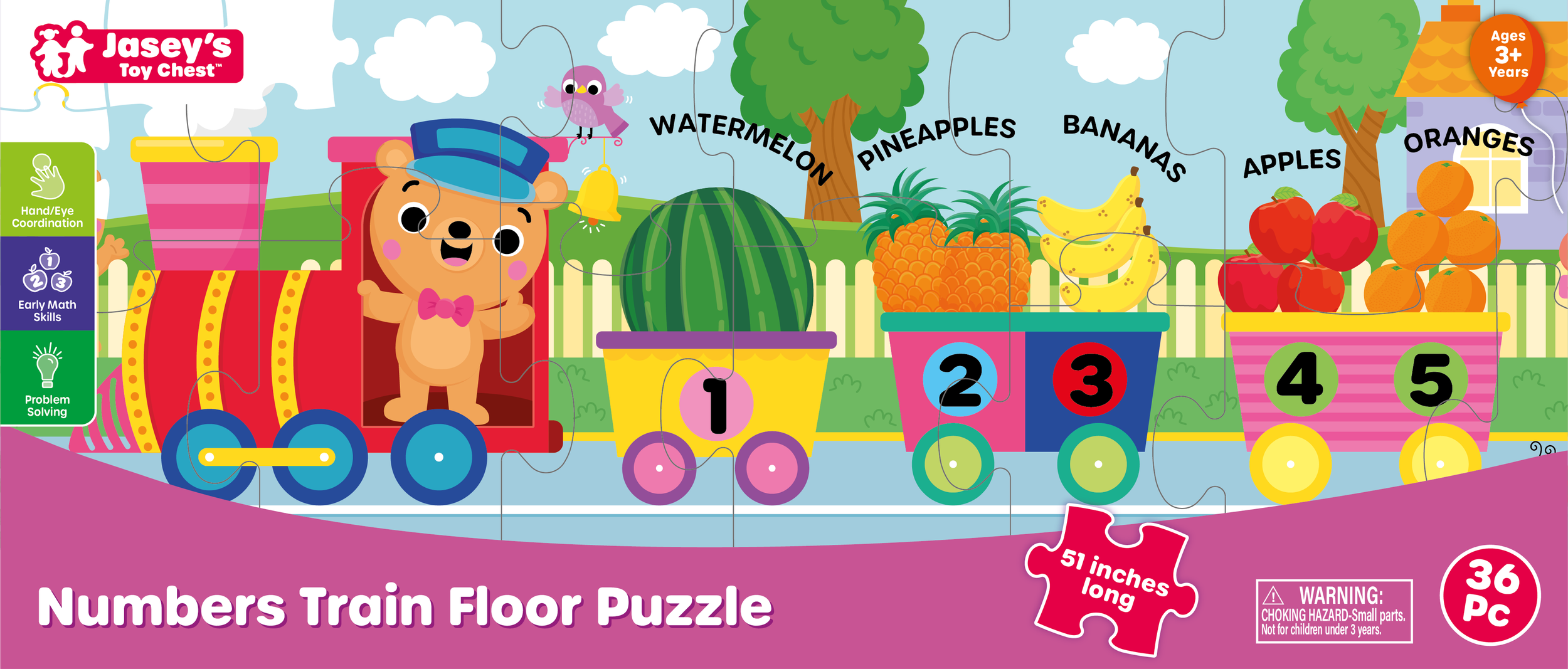
Numbers Train Floor Puzzle | 3+ Years
From our Cardboard Puzzles collection.
Skills: Problem-Solving, Independence, Handling Emotions
Build the train together.
This 36-piece floor puzzle is big! Work on it side by side, taking turns placing pieces. Teamwork builds cooperation and connection.Count the fruit.
As you build, count the fruit on each train car: "One watermelon, two pineapples, three bananas!" Counting together builds early math skills.Connect together.
Ask, "Which fruit is your favorite?" or "Have you ever tried a pomegranate?" Exploring preferences helps children discover their own identity.Model patience.
If a piece doesn't fit, take a deep breath together and try again. Showing calm during problem-solving helps them handle frustration.Celebrate the effort.
When the puzzle is done, stand back and admire it together: "You worked so hard!" or "You kept trying even when it was tricky!" Praising the process builds pride and perseverance. -
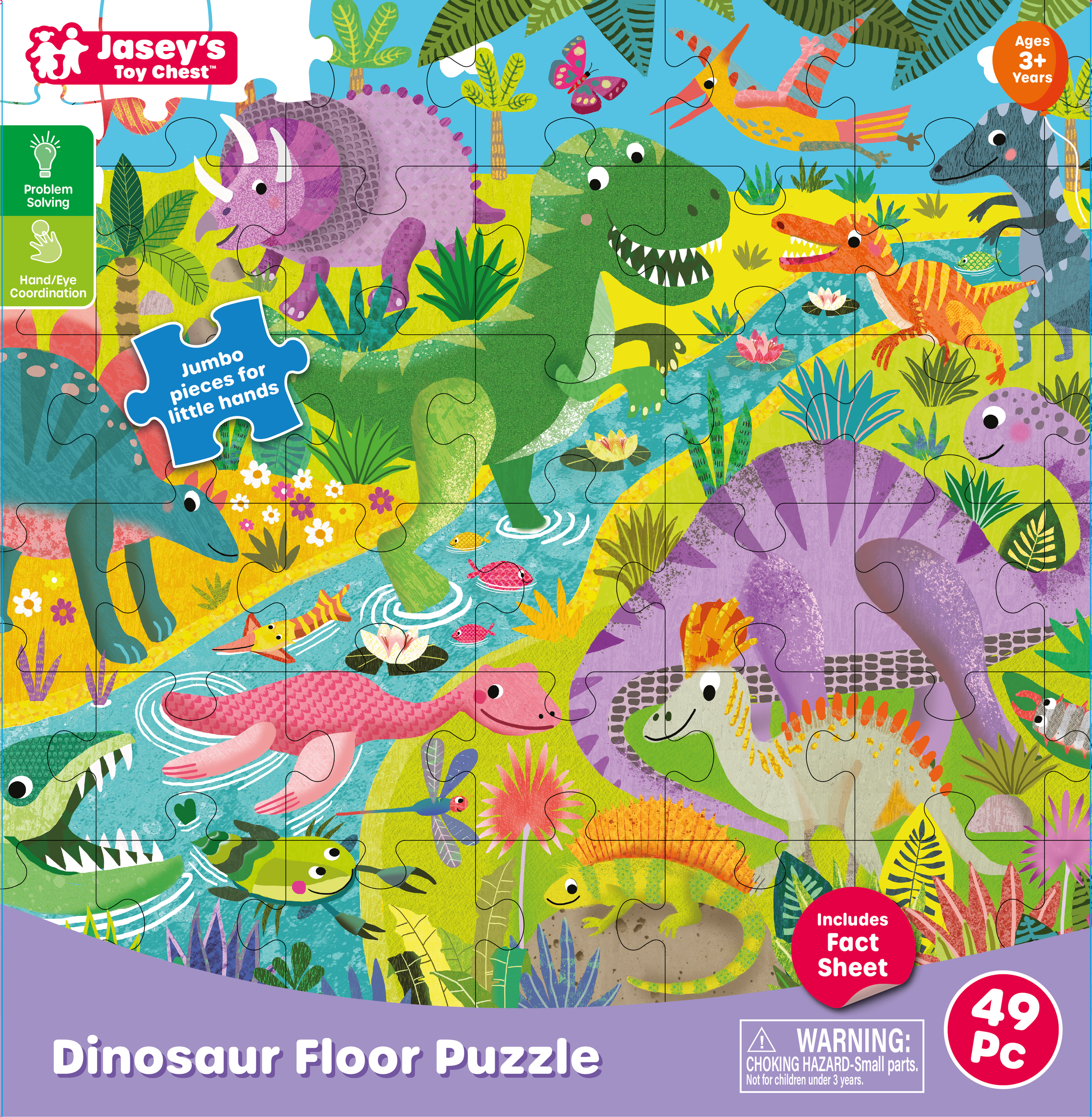
Dinosaur Floor Puzzle | 3+ Years
From our Cardboard Puzzles collection.
Skills: Problem-Solving, Independence, Handling Emotions
Build it together.
This 48-piece floor puzzle is big! Work on it side by side, taking turns placing pieces. Teamwork builds cooperation and connection.Explore the fact sheet.
Use the included fact sheet to learn about each dinosaur: where they lived, what they ate, and cool facts. Ask, "Which dinosaur do you think is the biggest?"Connect together.
Ask, "Which dinosaur is your favorite?" or "Would you want to meet a Velociraptor?" Exploring preferences helps children discover their own identity.Model patience.
If a piece doesn't fit, take a deep breath together and try again. Showing calm during problem-solving helps them handle frustration.Celebrate the effort.
When the puzzle is done, stand back and admire it together: "You worked so hard!" or "You kept trying even when it was tricky!" Praising the process builds pride and perseverance. -
Rainforest Floor Puzzle | 3+ Years
From our Cardboard Puzzles collection.
Skills: Problem-Solving, Independence, Handling Emotions
Build it together.
This 48-piece floor puzzle is big! Work on it side by side, taking turns placing pieces. Teamwork builds cooperation and connection.Explore the fact sheet.
Use the included fact sheet to learn about each animal: where they live, what they eat, and cool facts. Ask, "Did you know sloths are three times stronger than humans?"Connect together.
Ask, "Which rainforest animal is your favorite?" or "Would you want to see a jaguar in the wild?" Exploring preferences helps children discover their own identity.Model patience.
If a piece doesn't fit, take a deep breath together and try again. Showing calm during problem-solving helps them handle frustration.Celebrate the effort.
When the puzzle is done, stand back and admire it together: "You worked so hard!" or "You kept trying even when it was tricky!" Praising the process builds pride and perseverance. -
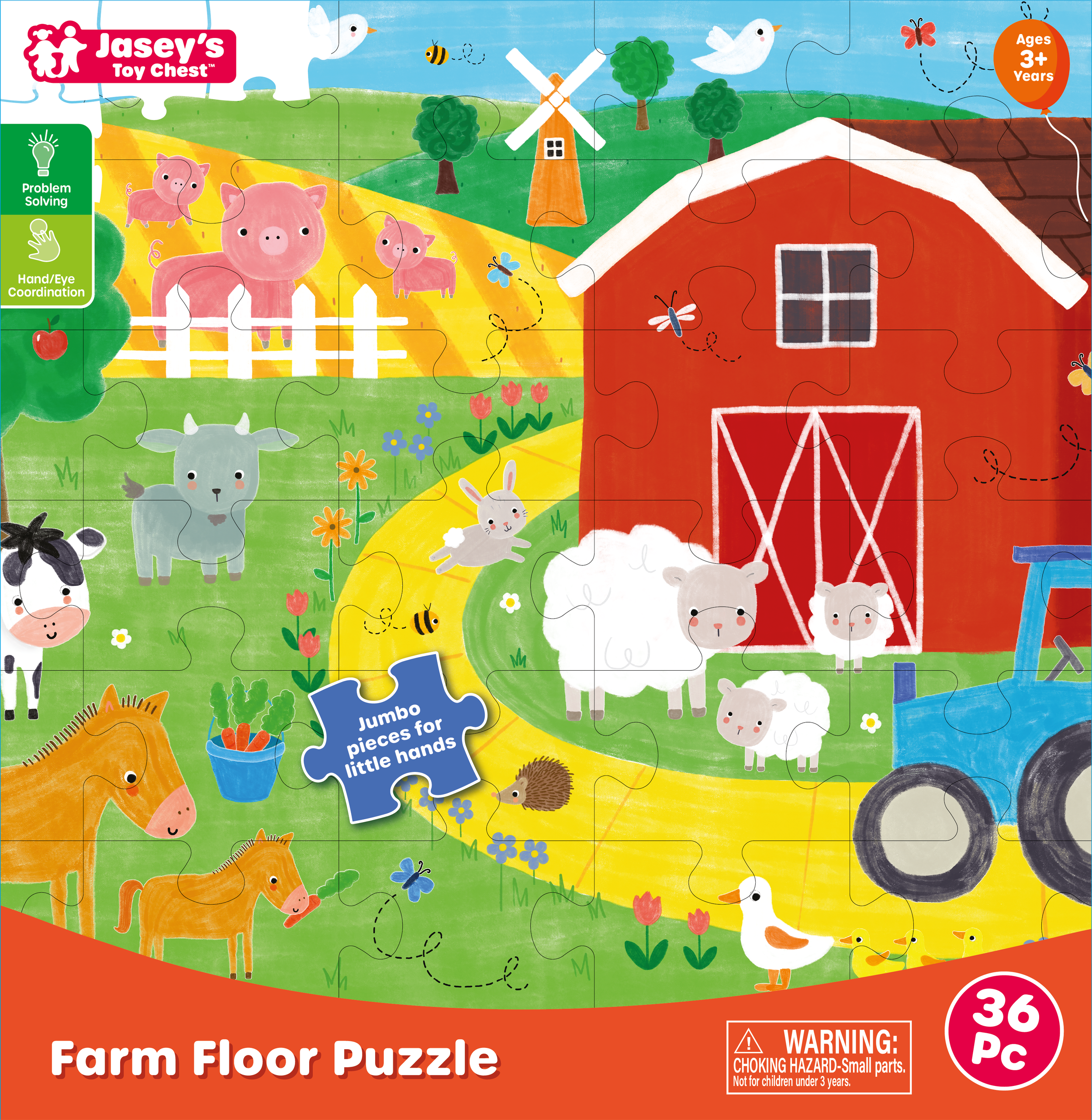
Farm Floor Puzzle | 3+ Years
From our Cardboard Puzzles collection.
Skills: Problem-Solving, Independence, Handling Emotions
Build it together.
This 36-piece floor puzzle is big! Work on it side by side, taking turns placing pieces. Teamwork builds cooperation and connection.Name the animals.
As you build, point out the animals: "Look, there's a cow!" or "How many sheep can you count?" Naming and counting builds language and focus.Connect together.
Ask, "Which farm animal is your favorite?" or "Would you want a cow as a pet?" Exploring preferences helps children discover their own identity.Model patience.
If a piece doesn't fit, take a deep breath together and try again. Showing calm during problem-solving helps them handle frustration.Celebrate the effort.
When the puzzle is done, stand back and admire it together: "You worked so hard!" or "You kept trying even when it was tricky!" Praising the process builds pride and perseverance.
Browse by Skill
Independence: Children build self-esteem and confidence when they discover they're capable of doing something themselves. Giving them space to work through a task on their own is one of the best ways to build that confidence.
Problem Solving: Play helps children learn to find ways to work through challenges when things don't go as planned. Giving your child space to figure it out on their own builds flexible thinking, persistence, and resilience.
Handling Emotions: When children can identify their feelings and describe how those feelings show up in their body, they start to understand big emotions and what to do with them. These skills help kids build patience and work through challenging moments.
Decision Making: Having to make a choice when they have more than one option helps them think through possible outcomes. "What do you think should happen next?" is a great question to ask your child when playing. This allows them to think about what a good decision may be and what possible outcomes their choice may lead to.
Social Awareness: Through play, kids practice empathy, kindness, and how to get along with others. You can show your child how people talk to each other, what's helpful, and what's unkind. This helps them understand how others feel and builds strong relationship skills.
Mindfulness: Being fully present and noticing what is happening in the moment is good for calming down and for identifying feelings. Paying attention to sights, sounds, and textures helps kids stay grounded and focused.
Playful Possibilities
-
Intentional Time
#fhtogglels/Read More/Close/ib
Your child benefits from one-on-one time with you, especially when you let them take the lead. When you focus on what they are doing, you will learn more about them and build their confidence. During intentional time, consider:- Watching and noticing what they are doing. This step can lead to great conversations where you learn more about what they’re thinking and how they’re feeling.
- Praising them for their effort: “You kept trying to get all of those in order. and you didn’t give up.”
- Not asking too many questions. Instead, be a “playcaster,” narrating play out loud like a sportscaster would: “Now you’re putting the blue block on top!”
-
New Experiences
#fhtogglels/Read More/Close/ib
Some children may feel nervous around new experiences. Playing with the Wooden Sparkling Smile Dentist Kit or Wooden Little Doc’s Medical Kit can help children understand what to expect and can make them more comfortable when going to the office for the first time. -
Helping Activities
#fhtogglels/Read More/Close/ib
Playing pretend helping activities is great for building a child’s confidence to help out in real ways. When a child helps wash dishes, they see themselves as connected to the family. It also builds their self-esteem to know that their help matters. -
Routines
#fhtogglels/Read More/Close/ib
Kids love routines, and they need them to feel secure. You can use toys to help them practice how to get ready for school with the 4-in-1 Learn & Play Pack or show them what goes into a healthy breakfast with the Wooden Crack & Play Eggs or Wooden Press & Pop Toaster Set. Routines can also help when moving on to the next activity, which can be challenging for kids. -
Family Traditions
#fhtogglels/Read More/Close/ib
When you play with a toy like the Wooden Slice & Share Birthday Cake and talk about how your family likes to celebrate birthdays, you're showing them how they fit into their family and traditions. This connects them not only with your family but also to their culture and background, which can build self-esteem. -
Pretending
#fhtogglels/Read More/Close/ib
When kids invent their own worlds and think creatively, it helps build confidence in new skills and helps them problem-solve in a safe environment. You can encourage pretend play by following their lead.
Ask the Experts
Advice From The Kids Mental Health Foundation
-
Even when we’re fully present and engaged, kids will still test boundaries. It’s what they do!
When it happens, take a breath. Then calmly remind them of your family’s rules. Something simple like, “Hey, we don’t throw toys in our house” works great.
The idea is to gently stop the behavior so you can get back to having fun together. If they keep at it, let them know what comes next: “If you keep throwing toys, I’ll need to put them away and we’ll have to take a break from playing.”
Here’s the tricky part: you have to actually follow through. Kids are smart. They’ll figure out pretty quickly whether you mean it or not! When kids see that your words match your actions, it builds trust, and it helps keep intentional time positive for everyone.
-
Having clear family rules helps everyone know what to expect during playtime. And here’s a little trick that works well: give kids a few options to choose from instead of leaving things wide open. It’s way easier for them to pick between three activities than to decide from infinite possibilities!
Before you start playing, chat with them about what happens if rules get broken. Maybe the toys go into “time out,” or playtime ends early—whatever makes sense for your family.
And yep, you guessed it: if you say it, you have to mean it. Following through is what makes the rules stick.
-
This is a great time to lean on your family rules. You might say something like, “We play nicely with our toys. If we can’t play nicely, we’ll need to put them away.”
If the rough play continues, follow through—put the toys away. Then redirect them to something else. A change of activity can work wonders.
-
That’s okay! Remember, your child is the leader here. If they don’t want you to join in, they might just be flexing their independence, and that’s a good thing.
Try sitting nearby and simply watching them. Every now and then, comment on what you see: “You’re pushing the truck!” or “Wow, that’s a tall tower!”
Let them know you’re there and happy to jump in whenever they want. Sometimes kids worry we’ll take over, so hang back a bit. Avoid asking too many questions or offering lots of suggestions. Just being present, without directing, can make all the difference.
-
One-on-one time is wonderful when you can make it happen, but family time is special too!
If everyone wants to join in, find a fun activity or toy that works for the whole group. Family time can absolutely count as intentional time. What matters most is that you’re present and engaged together.
-
Start simple—just sit nearby and watch. This helps you resist the urge to take over or offer too many suggestions.
When you’re ready to join in, mirror what they’re doing or follow their lead. You don’t have to say anything at first! Just playing alongside them is a great start.
As you get more comfortable, try narrating what you see: “I see you picked up the white cupcake,” or “You put the elephant on the red square.” That’s it. No pressure to be perfect, just be there.
-
Good news: you don’t need hours. Even just 5-15 minutes can make a real difference in your child’s life.
Instead of worrying about how much time you have, focus on the quality. Put away distractions, get down on their level, and give them your full attention. Those few minutes of truly being present? They matter more than you might think.
-
The Kids Mental Health Foundation has more information you may find helpful. Consider signing up for their newsletter to get information emailed to you every week! Below are a few articles that you might find helpful.